Running is one of the most accessible sports in the world. No membership, no partner needed, no fixed time slot. Shoes on, out the door. And yet a large proportion of people who start quit within a month.
Not because running is so hard. But because the expectation did not match reality.
This page is for those considering starting, or starting again. No schedule, no technical tips. Just an honest picture of what to expect, whether running is right for you, and how to go about it without immediately getting it wrong.
Is running something for you?
Short answer: probably yes. Running is not reserved for people with an athletic build, a sporting past or iron discipline. Most recreational runners are regular people who one day decided they wanted to make a change.
Be honest: running is a high-impact sport. Your joints absorb forces of two à three times your body weight. If you are seriously overweight, have joint problems or have certain cardiovascular conditions, it is wise to consult your doctor before you start. Not as a threshold, but as a starting point.
For most people, just start. Your body adapts. That's exactly what it was made for.
Why people start running
The reasons for starting are as diverse as the runners themselves. A selection:
- Lose weight or maintain weight
- More energy and better fitness
- Get rid of stress after a long day at work
- A concrete challenge: a 5 km run, a 10 km, a first half marathon
- Just be alone for a while and clear your head
All those reasons are valid. But know that the reason you stick with it in the long term is rarely the same as the reason you started with. Those who start to lose weight continue to run because they feel better mentally. Those who start for fitness discover that they no longer want to miss the silence.
What you can really expect in the first weeks
Most beginner guides skip this part. That's a shame, because it's exactly the information you need not to quit.
The first two weeks are tough
Your breathing feels chaotic. Your legs get tired faster than you expect. After ten minutes you wonder how people do this voluntarily. Let alone for an hour!
That's normal. Your body literally learns a new movement: the cardiovascular system adapts, tendons and joints get used to the load, your walking muscles become stronger. That takes time, and it doesn't feel elegant at first.
Around week four things start to turn around
Most runners describe &agrav; five a moment when it clicks. Breathing becomes calmer. You feel less like you're fighting. After training you have more energy than before. That is no coincidence: these are the first effects of an adapting body.
The runner's high comes later
The euphoric feeling after running that everyone talks about? You rarely feel that in the first few weeks. What you do feel: relief that it's over, and a slight sense of pride. That's already a lot. The real runner's high (the neurochemical euphoria) only comes when you can handle longer sessions and your body is used to the load.
The three things that make the difference
After all these years of sports and coaching runners, you always come back to the same three factors that determine whether someone perseveres or stops.
1. Tempo -> you're walking too fast
This is by far the most common mistake. Beginners consistently run too fast, are exhausted after each session, and stop because it "just isn't fun".
The correct beginner's pace is the pace at which you can have a full conversation. Comfortable, not panting. For many people, that feels barely harder than walking, and that's true. This way you build an aerobic base without overloading your body.
2. Expectation -> you want too much too quickly
Running a 5 km in 30 minutes without stopping is a realistic goal after 8 à 10 weeks. A 5 km in 25 minutes after 3 weeks is not that. Those who align their expectations with their starting point make consistent progress. Those who aim too high will drop out.
3. Regularity -> three times a week is enough
Walking every day as a beginner is counterproductive. Your body needs the rest days to get stronger. The adaptation to the training load does not take place during running, but afterwards: during rest. Three times a week, with a day of rest in between, is the ideal starting point.
Do you need a schedule?
Yes. Not because walking is complicated, but because a schedule takes the decision away from you. Without a plan, you go too hard on good days and too little on bad days. A schedule provides structure, keeps you honest, and automatically builds up the volume at the right pace.
The start-to-run schedule was created exactly for this purpose: 8 à 10 weeks, three sessions per week, based on the proven walking-walking principle. It takes absolute beginners to 30 minutes of continuous walking.
→ You can read everything about the method, the structure and the pitfalls in the complete start-to-run guide.
What do you need to get started?
As little as possible, but don't skimp on one point:
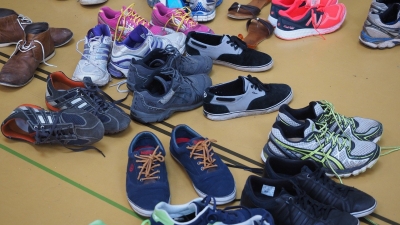
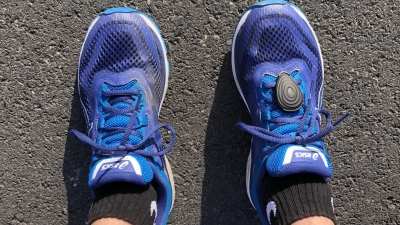
Running shoes: this is what you should invest in. No expensive watch, no special clothing, no heart rate monitor. But a good running shoe for your foot and running style is injury prevention. Bad shoes are one of the most common causes of knee pain, shin splints and Achilles complaints in beginners.
Go to a specialized running store for a free running analysis. A good shoe costs 80à 150 euros and goes for 600 à 800 km. That is cheaper than one visit to the physiotherapist.
→ Read the complete guide to running shoes if you want to know what to look out for.
Frequently asked questions from people who want to start
Do I need to be fit to start running?
I've tried to start before and stopped. Does it make sense to try again?
Is running bad for my knees?
How long will it take before I can run 5 km?
Ready to start?
Then the next step is the start-to-run guide: the complete method with schedule, structure, common mistakes and everything you need for your first real running weeks.
→ Or go straight to the free training schedule and start next week.

Bart Vandenbussche is passionate about sport and never shies away from a sporting challenge. He has run several marathons (including sub-3h), is an Iron+Ultra Viking, and currently has the Hyrox bug.
Question or suggestion?
Do you have a question or suggestion? Let us know!