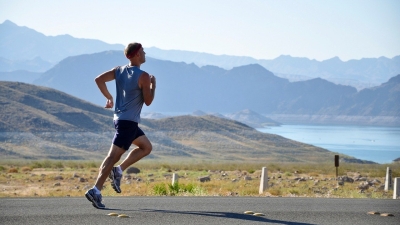
You have probably heard of it: that feeling of euphoria after a good run. Lightheaded, energy you did not expect, a kind of quiet satisfaction that lasts for hours. Some runners say it is the reason they keep running. Others wonder if it even exists, because they never feel it.
Both groups are right. The runner's high is real, but it is unpredictable, rare and harder to summon than Instagram posts suggest.
What is a runner's high?
For a long time, scientists thought that endorphins were the explanation. Endorphins are the body's own painkillers that are released during intensive exercise. The problem: endorphins hardly cross the blood-brain barrier. They explain the reduced pain in your muscles, but not the euphoric feeling.
The real explanation: endocannabinoids
Research from 2021, published in PNAS, convincingly shows that the runner's high is primarily caused by endocannabinoids: endogenous substances that are structurally similar to the active substance in cannabis. They bind to the same receptors in your brain and provide relaxation, a lowered pain threshold and a mild euphoria.
Unlike endorphins, endocannabinoids cross the blood-brain barrier effortlessly. And, as shown in mouse studies and human research, they are demonstrably produced during endurance exercise of moderate to high intensity.
In addition to endocannabinoids, dopamine (reward, motivation) and serotonin (mood, rest) also play a role in the feeling of well-being after running. Although these effects are less acute and more part of the long-term effects of regular exercise.
Why don't you feel it after every run?
That's the frustrating reality: the runner's high is not a guarantee. Most runners feel it occasionally, not structurally. Factors that influence it:
Intensity and duration are the most important variables. Endocannabinoid production appears to be strongest at moderate to high intensity (roughly zone 3 and above) and during sessions of at least 45 à 60 minutes. Short, easy Zone 2 runs rarely provide a runner's high, although they do offer other benefits.
Mental state also plays a role. Stress, sleep deprivation and fatigue dampen the effect. Runners who start a session relaxed and rested are more likely to report a high.
Adaptation is a complicating factor. As you get fitter, you have to work harder to trigger the same neurochemical response. Beginners sometimes feel it more strongly because each session is relatively intensive for their current level.
Outdoor running seems to have a greater effect than the treadmill, probably due to the combination of rhythm, nature and reduced cognitive load.
How do you increase the chance?
There is no switch, but there are circumstances that increase the chance:
Walk long enough
Under 30à 40 minutes the chance is small. Sessions of 60 à 90 minutes are the classic context for a runner's high.
Run at the right intensity
Not too calm (zone 1), not too exhausting (maximum effort dampens the effect). Zone 3 (= a pace at which talking is difficult but not impossible) seems to be the most effective.
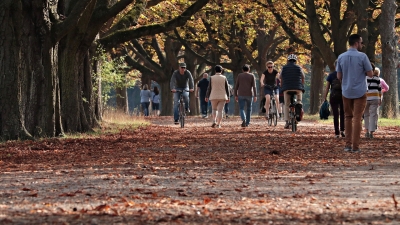
Walk outside, preferably in green areas
Nature lowers cortisol levels and promotes relaxation, which enhances the neurochemical response.
Walk without music, occasionally
Conscious attention to your pace, breathing and environment (also called running meditation) deepens the experience for many runners.
Consistency
Runners who train regularly for several years often describe the runner's high as more intense and frequent than in their early years. The brain adapts.
Runner's high vs. general well-being after running
It is important to make a distinction. The classic runner's high (the acute euphoria during or immediately after a run) is rare. But the general feeling of well-being, calmness and energy after running is not. Most active runners feel this after every good session.
The second effect is more stable and perhaps more valuable. They are the same neurotransmitters, but in lower concentrations and over a longer time. After 4 à After 6 weeks of regular walking, most people report that they sleep better, worry less and have more energy during the day.
"Exercise is the single best thing you can do for your brain in terms of mood, memory, and learning."
John Ratey, psychiatrist and author of Spark
Psychological benefits of walking: beyond the high
The runner's high is a nice byproduct, but not the reason why running works so well for your mental health. The actual mechanisms are more structural:
Stress reduction: cortisol decreases after a running session, sometimes significantly after 20 minutes of moderate exercise.
Anxiety reduction: regular walking reduces chronic anxiety complaints as effectively as some medications, meta-analyses show.
Mood: serotonin and dopamine are produced with each session. This is the neurochemical basis of what many runners describe as "clearer thinking" after walking.
Self-confidence: setting and completing small running challenges activates the reward system in the brain in a way that contributes to a more positive self-image.
Runner's high and addiction: is running addictive?
Some runners describe themselves as "addicted to running". That's not a metaphor: there is a neurobiological mechanism. The reward system (dopamine) that is active in the runner's high is the same system that is involved in other forms of reward.
For most runners this is completely healthy. But in a small group (especially people with a vulnerability to obsessive behavior or eating disorders), walking can become an unhealthy escape. Signs: walking despite injuries, fear and guilt if a training session fails, walking as compensation for eating.
If walking becomes a source of stress instead of a release from it, it makes sense to think about it.
Frequently asked questions
How long does a runner's high last?
Can I get a runner's high without running?
In summary
The runner's high is not a myth, but neither is it a guarantee. It is powered by endocannabinoids that are released during sufficiently long, intensive exercise. The chance is greatest with sessions of 60+ minutes in zone 3, outside, in a relaxed mental state.
But perhaps even more importantly: the general feeling of well-being, calmness and energy that walking structurally provides is more accessible, more reliable and more valuable in the long term than the acute high.
→ Just started running? Read start running. This is how you build the foundation from which the runner's high really comes.
→ Do you want to know which training gives the most neurochemical response? Read about zone 2 and interval training.

Bart Vandenbussche is passionate about sport and never shies away from a sporting challenge. He has run several marathons (including sub-3h), is an Iron+Ultra Viking, and currently has the Hyrox bug.
Question or suggestion?
Do you have a question or suggestion? Let us know!