As soon as the temperature rises above 20 degrees, most runners notice it gets harder. Your heart rate climbs faster, your pace drops, and what was normally a comfortable easy run suddenly feels like a battle. That is not weakness: that is biology.
This page explains what happens in your body in the heat, how to deal with it smartly, and when you are better off staying home.
What does heat do to your body while walking?
In heat, your body has to do two things at the same time that compete for the same resources: supply your working muscles with oxygen-rich blood and regulate your core temperature through the skin. The second costs more than you think.
Your body cools down by sweating and by sending blood to the skin. To achieve this, your heart pumps more blood to the skin and less to your muscles. This causes your heart rate to increase. Not because you run faster, but to compensate for the deficit. A heart rate that corresponds to zone 2 at 18°C can be zone 3–4 at 28°C at exactly the same pace.
The result: in heat the same pace is objectively harder. That's not imagination.
That sounds a lot. And yet it is the reality for most recreational runners. If you train by feeling (or heart rate) instead of by pace in the heat, you will stay in the right intensity zone and you will not build up useless fatigue.
In hot races (think of a summer 10 km or half marathon) it is smart to adjust your starting pace. Anyone who ignores that almost always gets stuck in the second half.
Tips for walking in the heat
Run sooner or later
The temperature is lowest early in the morning, and the air quality is usually the best during those hours. Running early before the heat also has a psychological advantage: your day starts with a completed workout.
Walking in the evening (after 7pm) is the next best thing. Avoid midday: that is when the temperature is at its highest and exposure to UV radiation is at its maximum.
Adjust your pace, not your motivation
Running in the heat in the same way as a normal day is the fastest way to exhaustion or heat-related complaints. Slow down your pace from the start. Use your heart rate as a guide: if your zone 2 heart rate is 140 bpm, stick with it. Even if you only run 6:30/km instead of 5:45/km.
Drink before you feel thirsty
Thirst is a delayed signal. By the time you feel thirsty during a hot run, you are already slightly dehydrated. Drink 300–500 ml of water before departure. For sessions longer than 45 minutes in the heat, it is wise to drink en route. Grab a hand water bottle or plan a route along a drinking point.
For sessions of more than 60–75 minutes at high temperatures, electrolytes (sodium, potassium, magnesium) are at least as important as water. Water alone dilutes your blood sodium when you drink excessively. This causes headaches, cramps and in extreme cases hyponatremia.
Dress well
Airy, light clothing in bright colors reflects heat. Dark colors absorb solar radiation. Technical running material wicks away moisture faster than cotton. A light cap or running cap protects your head and reduces direct sun exposure without retaining heat.
Cool your head and wrists
If you pass water or a drinking fountain along the way: wet your head, neck and wrists. There are blood vessels close to the skin, and cooling in those places has a direct influence on your core temperature. More effect per drop than drinking a glass.
Walk in the shade
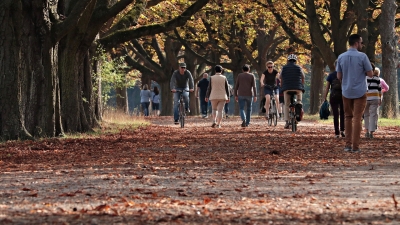
Sounds obvious, but it makes a remarkable difference. A walking route through a park or forest can take 4 à Feeling 6°C cooler than the same distance on an open road in the sun. Adjust your routes in the summer.
Heat acclimatization: your body learns to adapt
Good news: your body adapts to heat. After 10 à After 14 days of regular training in the heat (even at low intensity), a series of physiological adaptations occur:
- Your blood volume increases, so your heart has less difficulty supplying both muscles and skin
- You start sweating earlier, which makes cooling more efficient
- Your sweat contains less salt, your body stores electrolytes better
- Your heart rate drops measurably with the same exertion and temperature
These adjustments are partly transferable. A runner who has done a warm training block in the spring will perform better in a warm summer race than someone who always trained in the early morning or indoors.
When should you stop or stay home?
Heat can become dangerous. Knowing your own limits is not a luxury. It can prevent serious injuries.
Heat cramps are the mildest signal: muscle cramps due to electrolyte loss. Stop, drink with electrolytes, cool down.
Heat exhaustion continues: paleness, cold sweat, dizziness, nausea, increased heart rate at a decreasing pace. This is the body indicating that it is no longer keeping up with cooling. Stop, cool yourself, drink slowly.
Heat stroke is a medical emergency: confusion, stopping sweating, high core temperature (>40°C), possible loss of consciousness. Call 911.
The threshold values depend on the individual, but as a general guideline: above 30°C, intensive running is risky for unacclimatized runners. With a combination of high temperature and high humidity (>80%), cooling via sweating is less effective and the risk increases more quickly.
Runners who use medication that affects fluid balance (diuretics, certain antidepressants, antihistamines) are extra vulnerable to heat.
Heat and your training plan
In summer it is not wise to blindly follow your schedule as if the temperature does not exist. A few adjustments that runners and coaches widely apply:
Shift intensive training to the early morning or evening
Interval training and tempo running at 28°C are not only harder. They provide less training effect per kJ of effort than the same session at 18°C, because the heart is more concerned with thermoregulation.
Use summer as a base period
Easy, longer zone 2 endurance runs in the heat are excellent for your aerobic base and at the same time good for acclimatization. High volumes, low intensity: that is the summer strategy of many marathon runners.
Accept that your times are worse
Don't compare your summer training with your training in March. The effort is the same, the pace is slower. That's physiology, not regression.
Also take extra recovery
Heat puts extra strain on your body, even outside of walking. Sleep longer, drink more, eat a little more salt than you normally would.
Hydration: How Much is Enough?
A guideline that is widely used: drink 500–750 ml per hour in warm weather while walking. But the need varies greatly per person, temperature and intensity.
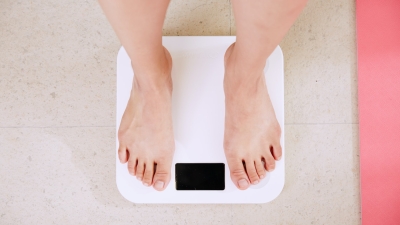
A simple self-test: weigh yourself before and after a running session without drinking. Each kilo of difference represents approximately 1 liter of fluid loss. Aim to have lost no more than 2% of your body weight in fluid afterward. At more than 2%, your performance demonstrably decreases and the risk of complaints increases.
At home it is best to drink water combined with some salty food: salt, broth or something similar.
Frequently asked questions
Should I drink isotonic drinks instead of water in heat?
Can I acclimatize by sitting in a sauna?
Is walking in heat dangerous for my heart?
In summary
Heat makes walking harder: that's physiology, not failure. Adjust your pace, drink before you feel thirsty, walk at the coolest time of the day and get to know your own limits. After a week or two, your body demonstrably adapts, and what once felt heavy becomes manageable again.
→ Do you want to know how your heart rate controls your pace in the summer? Read the guide about running by heart rate.
→ Are you building towards a summer competition? The page about periodization helps you adjust your schedule to the season.

Bart Vandenbussche is passionate about sport and never shies away from a sporting challenge. He has run several marathons (including sub-3h), is an Iron+Ultra Viking, and currently has the Hyrox bug.
Question or suggestion?
Do you have a question or suggestion? Let us know!