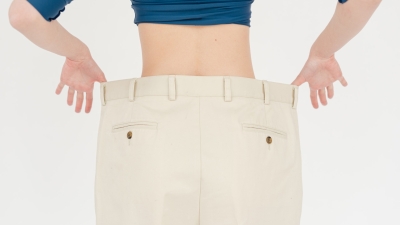
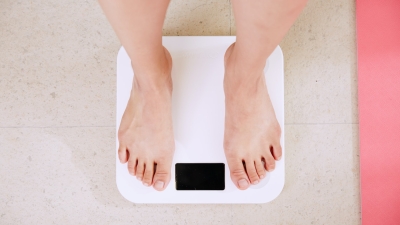
You step on the scales and the number is two kilos higher than yesterday. Panic! You did eat carefully? But the opposite is also possible: you have worked really hard for a week and your weight barely moved. Discouraging.
Both are completely normal. And whoever understands that, weighs smarter.
Why daily weighing is a good idea
Intuitively, it seems logical not to weigh yourself too often to avoid disappointment. But research points in the other direction.
A meta-analysis published in the Journal of the Academy of Nutrition and Dietetics showed that people who weigh themselves daily lose more weight on average and maintain their weight better than people who weigh themselves weekly or monthly. The explanation: daily weighing creates awareness and immediate feedback on your behavior the day before.
So it's not about today's number. It's about the pattern over weeks.
"Daily self-weighing is one of the most consistent predictors of successful long-term weight management. It's not about the number on any given day, but the pattern over time."
Rena Wing, professor at Brown University and founder of the National Weight Control Registry
Why your weight fluctuates daily
Your body weight is never stable, even if you eat perfectly. Factors that influence your weight from day to day:
Moisture: This is by far the largest variable. Food eaten contains water. Carbohydrates bind water (each gram of glycogen binds two and three grams of water). A meal rich in salt retains fluid. After an intensive workout you lose moisture through sweat. These fluctuations can easily be één &agrav; two kilograms per day, without any gram of fat having been added or lost.
Intestinal contents: Your intestines always contain some amount of food being processed. This may vary depending on your diet, fiber intake and bowel movements.
Hormones: In women, the menstrual cycle causes significant weight fluctuations due to fluid retention, especially in the lutal phase before menstruation.
Time of weighing: You always weigh less in the morning on an empty stomach than in the evening after a day of eating and drinking. That difference can be één à are three kilograms.
All this makes the daily number on the scale a poor indicator of actual fat mass. The weekly average is.
Always weigh the same way
To get comparable numbers, consistency is essential:
- Weigh in the morning, immediately after getting up and after visiting the toilet
- Sober, before you eat or drink anything
- Without clothes, or always with the same clothes
- On the same scale (different scales give different values)
These circumstances largely determine the number you see. By keeping them constant, you really compare yourself to yourself.
Working with weekly averages: this is how you do it
Add your daily weights from the past seven days and divide by seven. That weekly average is your real reference point.
Example:
| Day | Weight |
|---|---|
| Monday | 78.2 kg |
| Tuesday | 77.8 kg |
| Wednesday | 79.1 kg |
| Thursday | 78.5 kg |
| Friday | 77.9kg |
| Saturday | 78.8 kg |
| Sunday | 78.0 kg |
| Weekly average | 78.3 kg |
Wednesday looked worrying if you had only seen that number. This outlier disappears completely in the weekly average. Only if your weekly average rises or falls structurally over several weeks is there really something going on.
Apps zoals Happy Scale (iOS) of Libra (Android) doen deze berekening automatisch en tonen je ook de trendlijn, wat het echt inzichtelijk maakt.
A rule of thumb: only if your weekly average is two à moves in the same direction for three weeks in a row, you can speak of a real trend. Ééone week up or down is not proof of anything.
With a calorie deficit of 500 kcal per day, you theoretically lose one kilogram of fat every two weeks. In practice you only see that decrease after three à clearly in the weekly average for four weeks, because short-term fluctuations mask the signal. Patience here is not a virtue but a necessity.
The scale is one measure, not the only one
Weight tells you whether the energy balance is correct. It doesn't tell you whether you're losing fat, building muscle, or both at the same time. Someone who starts exercising can maintain the same weight for weeks while losing fat and building muscle. The scale doesn't show that.
Always combine weight with other measurements from your Current-me: body measurements, fat percentage and photos give a much fuller look at your progress.
Frequently asked questions
I'm always heavier in the morning than the night before. How is that possible?
My weight fluctuates more than three kilograms per week. Is that normal?
Should I weigh myself when exercising to build muscle?
In summary
Weigh yourself every day, fasting in the morning, in the same way. Don't be fooled by daily fluctuations because they are largely fluid and intestinal contents. Work with weekly averages and only see if anything really changes when the average moves in a clear direction for several weeks.
→ Do you also want to monitor your body shape? Read how to take body measurements and how your progress photos can tell you the most.
→ Back to the Current ME overview.

Bart Vandenbussche is passionate about sport and never shies away from a sporting challenge. He has run several marathons (including sub-3h), is an Iron+Ultra Viking, and currently has the Hyrox bug.
Question or suggestion?
Do you have a question or suggestion? Let us know!
Tags