Macronutrients are the three main building blocks of your diet. But the ratio in which you eat them best depends on who you are and what you want to achieve.
There is no universal optimal macro distribution. Whoever promises you that is oversimplifying something more nuanced. What does exist: a thoughtful approach that takes into account your body, your goal and your activity level.
The three macronutrients in brief
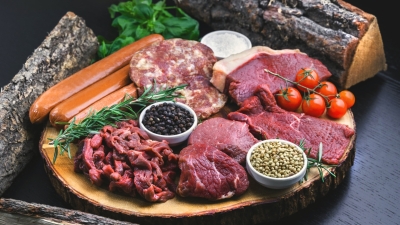
The three macros are proteins, fats and carbohydrates. Each has its own role: proteins are the building blocks for muscle and recovery, carbohydrates are the primary fuel for exercise, and fats are essential for hormone production and the absorption of fat-soluble vitamins. Everything about what each macro does, how many you need, and which sources are best can be found on the detail pages above. This page is about the ratio: how much of each, and how do you determine that?
Why the ratio counts, not just the calories
Total calorie intake determines whether you gain, lose or maintain weight. That is the energy balance, and it is leading. But the distribution of those calories over the three macronutrients determines the quality of what happens to your body: how much muscle mass you build or maintain, how satiated you feel, how you perform during sports, and how stable your energy level is throughout the day.
Two people with exactly the same calorie intake but a different macro distribution can achieve very different results. Someone who eats too little protein in a calorie deficit will lose muscle mass in addition to fat. Someone who eats too few carbohydrates during intensive sports training performs worse and recovers more slowly.
The two most common methods to distribute your macros
There are different approaches to determining your macro distribution. The two most common are division based on your goal and division based on your body type.
Method 1: distribution based on your goal
The most direct approach: you adjust your macro distribution to what you want to achieve.
| Target | Proteins | Fats | Carbohydrates |
|---|---|---|---|
| Lose weight | 30% | 30% | 40% |
| Keeping your weight | 25% | 25% | 50% |
| Gaining weight (muscle mass) | 20% | 20% | 60% |
If the goal is to lose weight, the protein percentage is higher. Proteins saturate better than carbohydrates and fats, and protect muscle mass in a calorie deficit. Carbohydrates are reduced slightly, but not drastically: too low a carbohydrate percentage in athletes harms training intensity and recovery.
When gaining weight (muscle mass), the emphasis shifts to carbohydrates, which fill glycogen stores and support the anabolic environment for muscle growth. The protein requirement remains substantial but is relatively slightly lower as a percentage.
→ The full details with calculation examples can be found on the page divide macros according to goal.
Method 2: distribution based on body type
Another approach is based on your body type, also called somatotype. The theory distinguishes three types:
Ectomorphic: slim by nature, fast metabolism, difficulty gaining weight. Needs more carbohydrates as an energy source and slightly less fats in percentage terms.
Mesomorphic: athletic build, easy to build muscle mass, relatively low fat percentage. Has a balanced distribution with slightly more proteins for muscle maintenance.
Endomorphic: broader build, slower metabolism, tendency to store fat. Benefits from more proteins and fats and fewer carbohydrates to limit insulin peaks.
| Body type | Proteins | Fats | Carbohydrates |
|---|---|---|---|
| Ectomorph | 20 à 30% | 15 à 25% | 50 à 60% |
| Mesomorphic | 25 à 35% | 25 à 35% | 35 à 45% |
| Endomorph | 30 à 40% | 35 à 45% | 20 à 30% |
Most people are a combination of two body types. An average of both distributions then provides a useful starting point.
→ The full details per body type can be found on the page divide macros according to body type.
Which method do you use best?
Both methods have their value, but also their limitations.
The goal-oriented method is more concrete and direct. If you have a clear goal (lose weight, maintain weight, build muscle mass), she provides a practical starting point. The disadvantage: it does not take into account how your body naturally reacts to certain macros.
The body type method is more personal, but the theory behind somatotypes is not undisputed scientifically. Not everyone fits neatly into one type, and the divisions are less evidence-based than nutrition scientists would like.
The most robust approach combines both: use your body type as a starting point for your basic macros, and adjust based on your goal and activity level.
The better approach: absolute grams instead of percentages
Percentages are a useful starting point, but they have a fundamental disadvantage: as your calorie intake changes, the absolute amount of each macro also changes. That doesn't always match what your body needs.
The more professional approach works with absolute grams per kilogram of body weight:
Proteins: 1.4 à 2.2 grams per kilogram of body weight per day. The upper limit is relevant for strength athletes and runners who train intensively. The lower limit is sufficient for less active people or people with a weight maintenance goal.
Fats: minimum 0.8 à 1.0 grams per kilogram of body weight per day. Fats are essential for hormone production and should never be reduced too far, even when dieting.
Carbohydrates: the rest of your calorie budget after proteins and fats. That makes carbohydrates the most flexible variable in a nutrition plan. The requirement is higher for intensive endurance sports (5 à 10 grams per kilogram per day in heavy training periods), lower for infrequent sports.
Calculation example
Suppose you weigh 75 kg, want to lose weight, and train moderately intensively four times a week.
- Calorie requirement in case of calorie deficit: assume 2,000 kcal per day
- Proteins: 1.8 grams × 75 kg = 135 grams = 540 kcal (27%)
- Fats: 1.0 grams × 75 kg = 75 grams = 675 kcal (34%)
- Carbohydrates: remaining calories = 785 kcal = 196 grams (39%)
That is a concrete, personal starting point that you can adjust based on how you feel, how you recover and whether you achieve your goal.
Macros and sports: what you should pay extra attention to
As an athlete, your needs differ from the guidelines for inactive adults. Three things are most relevant:
Your protein requirement is higher than average, especially for muscle recovery after training. Spread that intake over several eating moments per day for optimal absorption. Details about exactly how much you need can be found on the proteins page.
Carbohydrates are your most critical fuel during intensive exercise. Those who eat too little with a high training volume will perform noticeably worse and recover more slowly. The carbohydrates page explains how much you need based on your activity level.
Timing matters more for athletes than for inactive people. Carbohydrates and proteins before and after training maximize the training effect. Fats are less time sensitive.
→ Everything about nutrition around your training: nutrition before running and nutrition after running.
Frequently asked questions
Do I need to track my macros?
What if I don't hit my macros exactly?
Are there healthy and unhealthy sources of macros?
Does a low-carb diet make sense?
In summary
There is no universal optimal macro distribution. The best distribution is the one that suits your body type, your goal and your activity level. Use the target distribution or body type distribution as a starting point, work with absolute grams per kilogram rather than percentages, and adjust based on what your body tells you.
→ Calculate your distribution based on your goal: distribute macros according to goal.
→ Calculate your distribution based on your body type: distribute macros according to body type.

Bart Vandenbussche is passionate about sport and never shies away from a sporting challenge. He has run several marathons (including sub-3h), is an Iron+Ultra Viking, and currently has the Hyrox bug.
Question or suggestion?
Do you have a question or suggestion? Let us know!