The Hyrox Burpee Broad Jumps are station 4 of 8, and that is no coincidence. At that point you are halfway through the race. You have already run 4 kilometres, a SkiErg set, a Sled Push and a Sled Pull behind you. Your legs are heavy, your heart rate has been high for a while, and then a line of 80 metres (or 2 lines of 40 metres) appears that you need to cover with jumping burpees.
No weights. No machine. Just you, your explosiveness and your ability to maintain a rhythm when everything inside you is screaming to stop for a moment. This is the station that many athletes take too lightly in their training and that costs them dearly on race day.
What are the Burpee Broad Jumps at Hyrox?
The Burpee Broad Jump is exactly what the name says: a burpee, followed by a jump forward, repeated until you have covered 80 meters. That is the official distance for all categories: Open, Pro, Doubles & Relay.
At that point in the race you have already completed: running 1 km → SkiErg → 1 km walk → Sled Push → 1 km walk → Sled Pull → 1 km walk. After the Burpee Broad Jumps, four more stations and four kilometers of running await. So you are exactly at the turning point of the race.
How many repetitions you need depends on your jump length. Most athletes need between 40 and 60 Burpee Broad Jumps to cover 80 meters, depending on fatigue and jumping distance.
Rules & Standards
The official Hyrox rules for the Burpee Broad Jumps are specific, and a referee actively monitors each rep. A rejected repetition will cost you a warning, and two warnings will result in a time penalty.
The most important rules at a glance:
- You start standing upright, with both hands behind the starting line.
- Once your hands touch the ground, you should not move them forward anymore.
- Your hands should be placed no further than 30cm from your feet.
- Your chest should touch the ground on each rep (full burpee, not a half-rep).
- When you stand up, your feet should not exceed the position of your hands.
- During the jump, both feet must take off and land at the same time: no staggered take-off, no step landing.
- You are not allowed to take any steps forward between repetitions.
- The finish line is reached when you jump over the end line. Are you landing on the line? Then there is an extra repetition.
What is the average time of the Hyrox Burpee Broad Jumps?
The Burpee Broad Jumps are one of the most time variable stations in Hyrox. Athletes who master the movement and pace smartly can gain significant time at this station. Those who tackled the previous three stations too aggressively will pay the bill here.
| Category | Average time (2025) |
|---|---|
| Women's Open | 4:56 |
| Women Pro | 5:16 |
| Men's Open | 4:57 |
| Men Pro | 4:20 |
| Women's Doubles | 3:46 |
| Men's Doubles | 3:16 |
Times are indicative based on available race dates. Variation is high depending on jump length and pace management.
For comparison, the time differences between athletes at this station are greater than on the SkiErg or the Sled Pull. Technique and pacing are decisive here.
Technique: How to do the Burpee Broad Jump correctly?
The Burpee Broad Jump consists of two clear phases: the burpee and the jump. Performing both efficiently (and connecting smoothly) is the difference between a smooth rhythm and a choppy marathon over 80 meters.
The Burpee Phase
Start upright. Once you have crossed the starting line, bring your hands to the ground behind the starting line or within 30cm of your feet. Step or jump back into a plank position. Let your chest touch the floor (= mandatory!), then push yourself back up to the plank position.
Now get back up. Here's the key: your feet should not overtake the position of your hands when you stand up. That forces you to stay compact, which is actually good for the smooth transition to the jump.
The jumping phase
From the upright position, make a horizontal jump forward, with both feet at the same time. Swing your arms back and use that momentum to power your jump. Raise your knees during the flight to gain extra distance.
Land with knees slightly bent. This absorbs the impact and immediately puts you in position for the next burpee. Anyone who lands straight (stiff legs) will feel this in their knees and will lose the smooth transition.
Immediately after landing: hands down, next burpee. No extra step, no doubt.
Get in or jump out?
This is theé debate among Hyrox athletes, and there is no universally correct answer.
Getting in/out (one leg at a time) is the smartest choice for most athletes. It's a little slower than jumping, but it keeps your heart rate lower and saves your explosiveness for the jumping phase and the stations afterward. You can also use one knee, then bring your other leg just behind your hands and stand up.
Jumping in/out (both legs at the same time) is faster per repetition, but it significantly increases your heart rate. That may work for the first 30-40 meters, but most athletes find that they have to pause or downshift after that anyway, which negates the time savings.
Lunge and step-in: a combination of the two where you jump back with both legs, then step in one leg at a time. The vast majority of top athletes use this approach for the full 80 meters.
The rule of thumb: if you can do this consistently over 80 meters without letting your heart rate go red, use the lunge technique. Test this in training, not on race day.
Which muscles does the Burpee Broad Jump use?
The Burpee Broad Jump is a full-body exercise that simultaneously addresses strength, coordination and cardiovascular capacity. That's what makes it so treacherous: no muscle group is spared.
- Quadriceps & Glutes: The primary engine of the jump. Explosive hip extension determines your jumping distance.
- Hamstrings: active when landing and getting up from the burpee.
- Core (abdomen & lower back): stabilizes the entire movement, from plank position to landing.
- Chest & triceps: the pushing phase of the burpee (push-up position).
- Shoulders: loaded when going down and getting up, and when swinging the arm during the jump.
- Calves: absorption on landing, push-off on the jump.
Note: after the Sled Push and Sled Pull, your quadriceps and hip flexors are already tired. The Burpee Broad Jump affects exactly those same muscle groups. Train this in combination (compromised Burpee Broad Jumps after a sled session) to simulate the race.
Pacing strategy: how do you divide the 80 meters?
Station 4 is the middle of the race, and it feels like it. Your body sends signals that it is going to be difficult, and at the same time there is a tendency to start hard because there are no weights or machines involved. Don't do it.
The most dangerous mistake in the Burpee Broad Jumps: tackling the first 20-30 meters explosively with big jumps, only to get completely stuck and lose minutes with long pauses.
The better approach:
- Start controlled. The first 10 meters are the test: can you feel yourself panting yet? Then take it back a notch.
- Find a rhythm you can maintain. Constant movement with smaller pauses is more efficient than hard bursts followed by rest.
- Choose a consistent jump length of 1.5 to 2 meters, instead of jumping as far as possible each time. Bigger jumps are explosive but also tiring for your legs and nervous system.
- Rest lying down, not standing. If you need a break, take it lying down on the floor, not standing. Your heart rate drops faster in a lying position, and you are already ready for the next repetition.
- Divide it into mental segments. 80 meters is a long distance if you think about it from the start. Think in blocks of 20 meters, or just count per 10 reps.
"Maintaining steady movement with less breaks will yield a better time overall on this station than going too fast and having to take lots of pauses."
Meg Jacobi, elite Hyrox athlete - Centr
The best tips for the Hyrox Burpee Broad Jumps
Don't start with maximum jumps. The first 20 meters will feel fresh, but your legs won't. Big jumps take a disproportionate amount of energy and put your nervous system to work.
Rest lying down, not standing. This is perhaps the most useful tactical tip for this station: the recovery position between two reps is the floor, not a straight back with hands on the knees.
Check the rules before the race. Chest-to-floor is a strict requirement. Anyone who forgets this or becomes sloppy under fatigue risks rejected reps. And that is both demotivating and time-consuming.
Train the transition. The burpee-to-jump movement feels awkward for many athletes because the horizontal jump after a burpee feels different than a regular standing broad jump. Repetition solves this.
Synchronize your breathing. Exhale during the push-up phase, inhale when standing up. If you hold your breath or breathe irregularly, your heart rate increases unnecessarily.
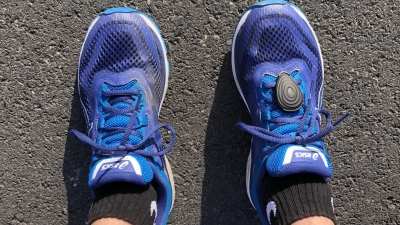
Choose flat, grippy shoes. You'll be jumping on turf. Running shoes with a thick heel block destabilize your landing. Flat shoes with good grip give you a more stable push-off platform.
Be ready before the finish line. Make sure you time your last few reps so that you jump just over the finish line, not on the line. An extra repetition in the final phase is a complete waste of time.
Common mistakes with the Burpee Broad Jumps
- Start too big. Maximum jumps the first 30 meters look impressive but will cost you the rest of the station.
- Chest not touching the ground. The most common reason for rejected reps. Fatigue causes athletes to reduce their range of motion without even realizing it.
- You jump with one foot in front of the other. The broad jump requires you to jump with both feet next to each other. If you make a staggered jump, you will receive a warning.
- Hands too far forward when going down. You should place your hands within 12 inches of the tips of your feet. If you do not do this, you will receive a warning and a penalty.
- Feet exceed hand position when standing up. Subtle but one rule. A sharp judge who sees this will give you a warning or a penalty.
- Take a break while standing. Your heart rate drops more slowly while standing than while lying down. Take some rest on the ground.
- No mental division. Staring 80 meters while you already have 3 stations and 4 km in your legs is a psychological obstacle. Work in segments.
How do you train for the Hyrox Burpee Broad Jumps?
Specific training: the movement itself
There is no better preparation than training the movement itself, but do it smart. Burpee Broad Jumps are intensive for your nervous system, so doing 80 meters 5 times a week is not a good plan.
- Technique session: 4 × 20 meters at a leisurely pace, focusing purely on smooth transition and consistent jumping length. Recover 90s between sets.
- Endurance training: 3 × 40 meters at race pace, 2 minutes rest. Build this up to 3 × 80 meters.
- Intervals: 10 Burpee Broad Jumps, 60s rest, repeat 6-8 times. Focus on constant jumping length, not speed.
- Compromised BBJ: 400-800m walk → direct 40-80m Burpee Broad Jumps. This simulates the race transition and trains exactly the fatigue context of station 4.
How often? 2 à Specific BBJ training 3 times a week is ideal. Once a week as part of a longer race simulation, once isolated by technique or volume.
Additional exercises for better Burpee Broad Jumps
The Burpee Broad Jump requires explosive leg strength and core stability. These are the exercises that make the most difference:
Explosivity and jumping power:
- Standing Broad Jumps: train exactly the horizontal jump you need, without the burpee overhead. Do 4 sets of 6-8 consecutive jumps, focusing on maximum distance and quick conversion after landing.
- Box Jumps: build vertical and horizontal explosiveness. 3 sets of 8-10 reps, focus on quick landing conversions.
- Bounding drills: alternate consecutive horizontal jumps on one leg. This trains dynamic stability when landing.
Burpee speed and endurance:
- Explosive push-ups: builds upper body strength. Alternate with regular push-ups for volume.
- Burpee intervals without jump: EMOM 10 minutes → 5 burpees per minute. Trains the fast pace of the burpee phase without the extra jumping load.
- Squat jumps: strengthen the take-off position for the broad jump.
Core & stability:
- Plank-to-pushup combinations: Simulates the transition from plank position to pushup and back.
- Dead bug: core stability that prevents energy loss in movement.
Alternatives if you don't have room for 80 meters
Not every gym or training room has 80 meters free. Alternatives:
- Shuttle variants: 2 × 40 meters, 4 × 20 meters = same total volume, slightly different tempo pattern due to the turning movements.
- Burpees + standing broad jump on spot: no horizontal distance, but the movement link is the same. Mark your landing and try to jump further than the last each time.
- Treadmill burpees + plyometrics: less race-specific but keeps the heart rate pattern active.
The best solution: find space for a full 80 meters once every 10-14 days: an athletics track, a parking garage, a sports hall. The specific fatigue over the entire distance cannot be replaced.
Summary: This is how you get better at the Hyrox Burpee Broad Jumps
- Station 4 is the turning point of your race. Anyone who goes too fast here will pay for it in the second half.
- Entering is smarter than jumping in for most athletes. Test this in training and choose consciously.
- Rest lying down, not standing. Your heart rate will drop faster and you will be ready for the next rep.
- Consistent jumps of 1.5–2 meters are faster than maximum jumps that exhaust you.
- Train compromised: BBJs after runs and sled work to know race-specific fatigue.
- Divide the 80 meters into mental blocks. 20 meters at a time is clear; staring at the full distance is demotivating.
Do you want to structure your entire Hyrox preparation? View our training schedule for beginners or go directly to the next station: Hyrox RowErg.

Bart Vandenbussche is passionate about sport and never shies away from a sporting challenge. He has run several marathons (including sub-3h), is an Iron+Ultra Viking, and currently has the Hyrox bug.
Question or suggestion?
Do you have a question or suggestion? Let us know!
Tags