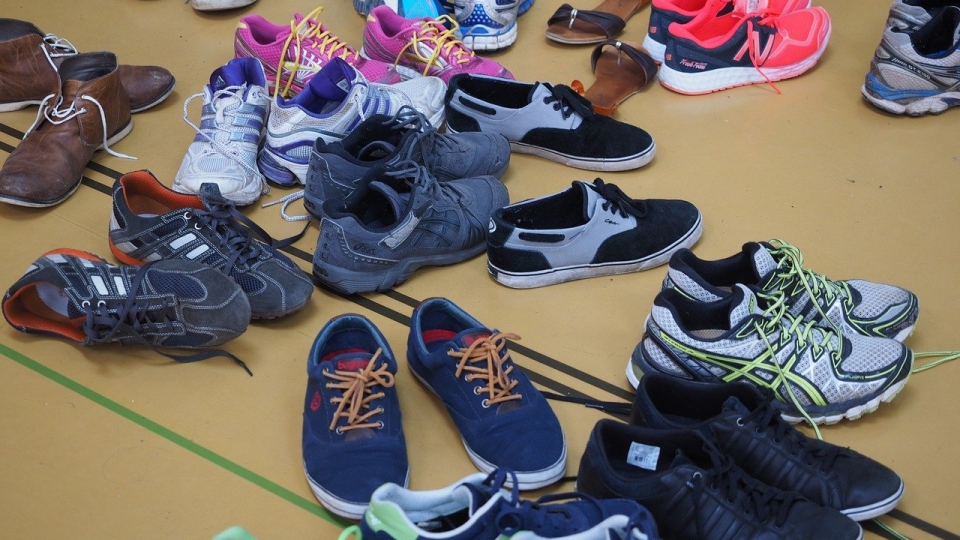
Your running shoes are the only piece of gear that truly makes the difference. Not your watch, not your shorts, not your heart rate monitor. But the shoes that day in, day out have to absorb forces of two to three times your body weight. With every step, every kilometre.
Yet the choice of running shoes is underestimated by many beginners (and also by many experienced runners). People buy on feeling, on looks, or based on a sale. The result? Blisters, knee pain, injuries, and the running shoes are sitting in the cupboard after a month.
In this guide we help you make the right choice step by step, from pronation to drop, from training shoe to race shoe.
What makes a running shoe different from a regular sports shoe?
A running shoe is specifically designed for one movement: running ahead of repetition. That sounds simple, but requires a completely different design than the average sports shoe or sneaker.
Where a cross trainer or fitness shoe is built for lateral stability (sideways movements), a running shoe is built for efficient, shock-absorbing forward movement. The midsole is softer and thicker, the last is slimmer, and the weight has been kept as low as possible.
Running with regular sports shoes is technically possible, but the risk of overuse injuries increases rapidly. Especially if you walk more than once a week.
"Most running injuries are not bad luck. They are the result of the wrong shoe, the wrong volume, or both."
Decathlon Sports Health
Step 1: Know your pronation profile
Before you even look at a model, you need to know how your foot rolls. That's called your pronation pattern.
Pronation is the natural tilting of the foot during landing. When landing correctly, you touch the ground with the outside of the heel and roll off to the big toe. That is the shock absorber of your body.
There are three patterns:
Neutral pronation Your foot tilts inwards by about 15%: just enough. The wear profile of your old shoes shows an S-shape. This is the most common profile and you have the most choice in shoes.
Overpronation Your foot tilts too far inwards. The inside of your heel and the ball of your foot wear out faster. You need extra support on the inside of the sole. These are the so-called stability shoes (also called anti-pronation shoes).
Underpronation / supination Your foot hardly tilts inwards. The outside of your shoes wears out faster. This is less common, but requires shoes with a lot of cushioning and a wide, flat last.
How do you recognize your pronation pattern?
The easiest way is to turn over your old shoes and look at the wear:
- Wear on the inside of heel and forefoot → overpronation
- Wear in an S-shape → neutral pronation
- Wear on the outside → underpronation/supination
Do you want to be more certain? Go to a specialized running shop for a running analysis. They film you while you walk and provide tailor-made advice. This is free at most running stores and definitely worth it if you're just starting out.
Step 2: Understand the shoe types
Now that you know your pronation profile, you can choose the right category.
Neutral shoes
For runners with a neutral gait or slight supination. Symmetrically constructed, no corrections. Most choice, most freedom. Examples: ASICS Gel-Nimbus, HOKA Clifton, Saucony Triumph, Brooks Ghost.
Stability shoes (antipronation)
For runners with overpronation. Extra reinforcement on the inside of the midsole prevents the foot from sinking too far inwards. Examples: ASICS Kayano, Brooks Adrenaline GTS, New Balance 860.
Motion control
For runners with severe overpronation. Stiffer, heavier, and with a wide, flat sole. Less common, but sometimes necessary in case of strong deviations.
Step 3: Choose the right type for your purpose
Your pronation pattern determines the category. But within that category you still have a choice: for what purpose do you use the shoe?
Everyday training shoe
This is the workhorse of your shoe rack. Lots of cushioning, durable outsole, comfortable for longer runs. Here the weight may be slightly higher. Examples: HOKA Bondi, ASICS Gel-Nimbus, Brooks Ghost, Saucony Ride.
Lightweight training shoe / pace shoe
For interval training, tempo runs and faster kilometers. Less cushioning than an everyday shoe, but more responsive and lighter. Examples: ASICS Gel-Cumulus, Saucony Kinvara, Nike Pegasus.
Competition shoe / racing shoe
For competition days and speed work. Carbon plate, superfoam, minimal outsole. As light and responsive as possible, but fragile and not suitable as a daily training shoe. Examples: Nike Vaporfly, Adidas Adizero Adios Pro, ASICS Metaspeed Sky.
Trail shoe
For unpaved surfaces: forest paths, hills, beach. Coarse profile sole, reinforced toe, sometimes waterproof. Do not use them on asphalt! The grip wears out quickly and the sole is less suitable for hard surfaces.
Step 4: Understand the Drop (whole difference)
The drop (also called offset or heel drop) is the height difference between the heel and the forefoot of the shoe. This has a major influence on your running technique and load.
| Drop | What it means | For whom |
|---|---|---|
| 0–4mm | Minimalist, more forefoot landing | Experienced runners, short distances |
| 6–8mm | Neutral, widely applicable | Most runners |
| 10–12mm | More heel support | Hiellanders, runners with Achilles tendon problems |
Important: Do not suddenly change from a high drop to a low drop. Your calves, Achilles tendon and arches need to get used to it. Always do this gradually over several weeks.
Step 5: Choose the right size
Your running shoe size is almost always half to a full size larger than your normal shoe size. When you walk, your feet swell and you need space at the front: at least one centimeter between your longest toe and the tip of the shoe.
Never buy running shoes online without trying them first, unless you already know the same model. Each manufacturer uses a different last, and sizes vary per brand.
Also check the width. Runners with wide feet sometimes benefit from an extra wide variant (referred to as 2E for men or D for women by brands such as New Balance and ASICS).
How long do running shoes last?
Did you know that the cushioning of a running shoe already drops by 33% after 250 kilometers? After 500 kilometers it still functions at 70% of its original capacity. You don't always feel this directly, but your knees and hips do.
Keep track of your kilometers via apps such as Strava or Garmin Connect. Both apps let you keep track of how many kilometers you have walked per shoe.
Do you run more than three times a week? Consider alternating two pairs of shoes. The foam in the midsole needs about 48 hours to fully bounce back. With two pairs you not only double the lifespan per pair, but you also always walk on a fully repaired sole.
Common mistakes when buying running shoes
Buy based on appearance. The most beautiful shoe is rarely in the right category for your foot. Buy based on feeling, not on color.
Not enough space at the front. Blisters and black nails are almost always the result of a shoe that is too small.
Use crossfit or fitness shoes for walking. These are built for stability during lateral movement, not repetitive shock absorption during forward movement. In the short term it feels fine; In the longer term you increase the risk of injuries.
Immediately walk for a long time in new shoes. First break in new shoes during shorter training sessions. Your body and your foot have to get used to a new shoe, even if it is a successor to a model you have been wearing for years.
Do not have an analysis done. Especially if you are just starting out or if you already have complaints: have your running style analyzed. Free, fast, and you avoid injuries.
Which shoes will be popular in 2026?
Below is a brief overview of well-regarded models per category. These are not paid recommendations. These are shoes that consistently score highly in independent tests and are popular with the running community.
Everyday training shoes (neutral)
- HOKA Clifton 9: plenty of damping, light weight, widely applicable
- ASICS Gel-Nimbus 27: premium cushioning, durable, excellent for long runs
- Saucony Triumph 22: responsive and comfortable, strong for longer workouts
- Brooks Ghost 16: reliable all-rounder, also suitable for beginners
Daily training shoes (stability)
- ASICS Gel-Kayano 32: class icon for overpronators
- Brooks Adrenaline GTS 24: gentle stability, widely applicable
- New Balance 860v14: solid anti-pronation shoe with good fit
Pace shoe / lightweight
- Saucony Kinvara 14: light, responsive, low drop
- ASICS Novablast 5: resilient, popular on Strava
- Nike Pegasus 41: versatile, widely applicable
Competition shoes
- Nike Vaporfly 3: proven on all major marathons
- Adidas Adizero Adios Pro 4: popular with sub-toppers
- ASICS Metaspeed Sky+: excellent energy return
Use the extra hole in your running shoes
You may have wondered what the extra 2 holes at the top of your running shoes are for. It becomes clear in the video below:
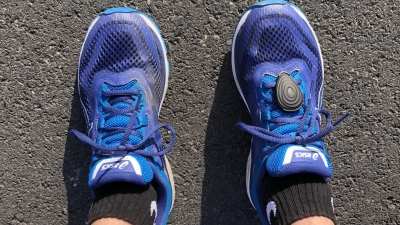
While walking, your feet move in your running shoes. By using the extra lace hole you create a kind of lock that makes your foot more secure in your shoes. This greatly reduces the risk of blisters!
How do you make a lock?
Before you tie your laces, make a loop on both sides. Then put your laces through those 2 loops and tighten everything. Then tie your laces as before.
In summary: this is how you choose the right running shoe
- Determine your pronation pattern (wear pattern or gait analysis)
- Choose the correct category: neutral, stability, or motion control
- Determine the goal: daily training, pace or competition
- Choose a drop that suits your technique and background
- Buy a half to full size larger than normal
- Try several models and buy based on feeling, not on appearance
- Replace them after 500–800 km
Frequently asked questions
Can I buy running shoes online?
Should I buy expensive running shoes?
Can I use the same shoes for the gym and for running?
How do I know if my shoes are worn out?
Do I need stability shoes if I overpronate (slightly)?
Want to read more about running? Also check out our guide to running technique, the start-to-run approach for beginners, or discover how to train for a Hyrox.

Bart Vandenbussche is passionate about sport and never shies away from a sporting challenge. He has run several marathons (including sub-3h), is an Iron+Ultra Viking, and currently has the Hyrox bug.
Question or suggestion?
Do you have a question or suggestion? Let us know!