You rarely lose a good HYROX race through lack of gear. But the wrong shoes, clothing that chafes or hands that slip on the Sled Pull? That does cost you time and comfort. Everything about what you need, what is useful, and what you can safely leave at home.
Shoes: the most important choice
Of all the gear decisions you make for a HYROX, your shoes are by far the most important. And at the same time the one that is most misunderstood. Because HYROX is not a running race. It's not a CrossFit competition either. It's right in between, and that requires a shoe that can do that.
What makes a HYROX shoe different?
A regular running shoe has one purpose: to help you move along a straight line as quickly and efficiently as possible. A CrossFit shoe is flat, stable and stiff: great for weightlifting, but torture for a 5-mile run. A good HYROX shoe should be able to do both.
Specifically, you are looking for a combination of four properties:
Grip. This is the most underestimated feature. During the Sled Push and Sled Pull you stand with your feet on a carpet or sports floor and push or pull hundreds of kilos. If your sole slips, you won't just lose time. You also waste a huge amount of energy. In addition, sports hall floors around the drinking taps are regularly wet or slippery. Grip is therefore not optional.
Cushioning. You run 8 kilometers in a HYROX, but never with fresh legs. After the SkiErg, after the Sled Pull, after the Wall Balls: you start every run with sore muscles and a high heart rate. Sufficient cushioning protects your joints and helps you get through the runs more comfortably.
Stability. With Sandbag Lunges, Wall Balls and Burpee Broad Jumps you need a stable base under your foot. A shoe that bends or tilts under lateral loads works against you at exactly the stations where you have to work the hardest.
Lightweight. Over eight kilometers and ninety minutes, heavy shoes cause extra fatigue. The difference between a 250 gram and 350 gram shoe sounds minimal, but feels different after run 6.
"A HYROX shoe should walk with you, not against you. It's not a run on asphalt and it's not a CrossFit WOD. Anyone who forgets that and chooses purely based on speed will pay for it with the sleds."
Greg Willimas, Rox Lyfe
Carbon shoes: yes or no?
Every year the same question in the HYROX community: can I handle my Vaporfly or Alphafly? And every year the same honest answer: for most athletes that is not a good idea.
Carbon shoes are built for efficiency on asphalt, at high speeds, in a straight motion. In HYROX you use them on sports hall floors and carpet, during explosive lateral movements, after stations where your muscles are already full. That is exactly the area in which carbon shoes excel less.
There are three specific objections:
First: grip. The rubber sole of most carbon shoes is optimized for asphalt, not for the floor of a sports hall or the runner of a Sled Push. Especially with sleds, a lack of grip can cost you minutes.
Second: stability. The high stack and soft foam of a carbon shoe create instability under lateral loads. With Wall Balls and Lunges this is a disadvantage that you feel.
Third: muscle activation. Research shows that carbon shoes take over some of the work of your foot and calf muscles. Handy for a marathon, but less ideal if you need those same muscles maximally for the strength components.
Exception: If you run HYROX Pro and you are an experienced, relatively heavy athlete who is used to carbon shoes, you may consider choosing a model that also offers stability, such as the Saucony Endorphin Speed (with nylon plate) or the PUMA Deviate Nitro Elite 4 HYROX (specially built for hybrid use). But for the vast majority of recreational and recreational-competitive participants, choose a good all-round training shoe over a racing carbon shoe.
Recommended models
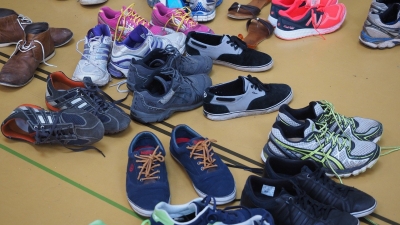
There is no universally best HYROX shoe. What works for a compact endurance athlete of 65 kg works differently than for a strength athlete of 90 kg. But the models below are consistently rated well by coaches, experts and major testing institutes:
PUMA Deviate Nitro 3 HYROX: the most mentioned all-rounder. Specially developed in collaboration with HYROX, with PUMAGrip rubber for excellent grip on sports hall floors and sufficient cushioning for the running pieces. Slightly on the pricier side, but built for exactly this use.
PUMA Velocity Nitro 4: the more accessible PUMA option. Lighter and slightly less grippy than the Deviate, but an excellent choice for beginners and recreational participants who do not want to pay the top price. Also suitable as a training shoe.
Saucony Endorphin Speed 5: a nylon plate instead of carbon provides responsiveness without the instability. Light, fast and more stable than pure carbon models. Popular with athletes with a strong running background who want a little extra speed.
Nike Pegasus: the reliable all-rounder that has been running on HYROX floors for years. Not the fastest, not the lightest, but stable, comfortable and durable. Good for training and for those who don't want to rely on shoes for their race.
Asics Gel-Kayano 32: ideal for athletes who need more stability, taller runners or participants with a tendency to overpronate. Slightly heavier, but excellent cushioning and grip.
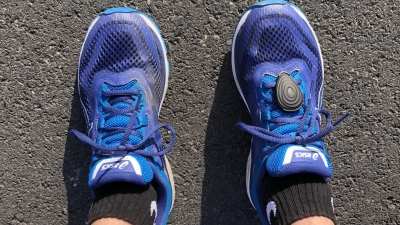
Regardless of which model you choose, break in your shoes before race day. Wear for at least 4 to 6 weeks during training. Never new shoes at a match.
Training shoe vs racing shoe
Should you buy separate shoes for training and racing? Not necessarily. But it can be smart.
The PUMA Velocity Nitro is popular as a training shoe, because you don't wear it out before race day. You then keep the Deviate or Endorphin Speed as a "competition shoe": you do a few important training sessions with it, but enough to be completely familiar with how it feels.
If you only buy one pair, choose something that you can wear comfortably for endurance runs, compromised runs and stations. The PUMA Velocity Nitro 4 and the Nike Pegasus are the safest choices in that respect.
Clothing: comfort above all
HYROX events are always indoors. But the temperature in a sports hall with 2,000 participants rises quickly. Your body works at high intensity for 60 to 90 minutes. That means: you start sweating. A lot of. And then your choice of clothing is no longer an afterthought.
The golden rule: avoid cotton. Cotton clothing absorbs and retains sweat. After ten minutes you are walking around in a wet, heavy and cold piece of cloth. Choose synthetic fabrics such as polyester, nylon or a polyamide mix: materials that actively wick away moisture.
Outerwear
A fitted, technical shirt or singlet is sufficient for most participants. The shirt should not be too loose: loose fabric can be distracting or irritated during Burpee Broad Jumps or Wall Balls. Choose a fit that moves without pinching.
PUMA, in collaboration with HYROX, has developed a clothing line with strategic ventilation zones: functional but also on the more expensive side. Nike Dri-FIT and Asics Core tops are cheaper alternatives that work just as well in terms of moisture wicking.
For women: a well-fitting sports bra is at least as important as the shirt. Choose something with good support that stays in place even during intensive movements. Think Wall Balls and Burpee Broad Jumps.
Undergarments
Shorts with built-in tights are the most popular choice among HYROX participants. It offers freedom of movement and compression, without your clothes curling up or shifting during the Sled Pull or Lunges. For women, tight leggings are a popular alternative.
Compression clothing can help with muscle support and blood circulation, but make sure it is not too tight. You must be able to squat, jump and lunge completely without resistance from your clothing.
Socks
Don't underestimate socks. Blisters on race day are not only painful: they also cost you pace on the runs. Choose quick-drying socks with a good fit and ventilation. Compression socks can help with support and recovery, but test them first during training.
Accessories: what really helps?
This applies more than ever: don't bring anything that you haven't tested during training. Race day is the worst time to discover that your watch is irritating or your gloves are slipping.
Gloves
Gloves are permitted during HYROX and are worn by a large number of participants. They protect your hands during the Sled Pull, Farmers Carry and RowErg: stations where you hold a weight for a long time and blisters or calluses are real.
Choose thin, well-fitting grip gloves. Gloves that are too thick give you less feeling for the equipment and can actually be detrimental to the RowErg or SkiErg. Thin CrossFit or Mechanix gloves are a popular choice.
Important: also wear them during training. Gloves that you only put on for the first time on race day always fit differently than expected.
Also keep in mind that chalk (magnesium powder) is available at each station. Some athletes do it without gloves and rely purely on chalk. That works fine too.
Chalk (magnesium powder)
At Sled Pull and Farmers Carry there is always a bowl of chalk ready. Chalk absorbs sweat and significantly improves your grip on the rope and kettlebells.
Can you bring your own chalk? Loose chalk (blocks or loose powder) is allowed in most cases, but liquid chalk is useful for training so as not to dirty your own equipment. If in doubt, check the official HYROX rules for your specific event.
Wristbands and headband
Small, cheap and underrated. A headband or sweatband keeps sweat out of your eyes and on high-intensity stations like the SkiErg or RowErg, where your head goes down, it can make the difference between staying focused or having to constantly wipe your eyes.
Wristbands are useful if you notice that sweat runs down your arms into your hands and affects your grip during station work.
Knee pads and sleeves
Knee pads are optional and are mainly worn for Burpee Broad Jumps and Sandbag Lunges, where your knees repeatedly touch the floor. Anyone who has sensitive knees or does not want to build up calluses on their kneecaps during training may benefit from this.
Knee pads may be worn, but make sure they are not so thick that they limit your walking motion or squat depth. Test them thoroughly before race day.
Calf or thigh compression sleeves are worn by some athletes for support or heat retention. They are allowed, but here too the following applies: try them out during training, not for the first time on race day.
Sports watch and pacing tools
A sports watch is one of the most useful tools you can take with you to a HYROX. It allows you to track your running pace and heart rate. Exactly the information you need to avoid the most common mistake: starting too soon.
Set your watch to your target pace in the weeks before the race and get to know what that feels like. On race day you use it as an anchor: is the kilometer time increasing? Calm down. Are you far below that? Careful.
Smartwatches with GPS work fine, although the GPS is sometimes less accurate in an indoor hall. In that case, use the heart rate or running frequency as a pacemaker instead of the pace.
What can you leave at home?
Just as important as knowing what you take with you is knowing what you don't need.
CrossFit shoes (such as Nike Metcon or Reebok Nano): too stiff for 5-mile running. Ideal for the stations, torture for the runs. Leave them alone.
Thick, heavy backpacks or vests: you walk and work at high intensity for 60 to 90 minutes in a warm hall. The less you strain, the better.
New gear you never tested: applies to everything: shoes, socks, gloves, watch, pants. Nothing new on race day.
A complete energy bar collection: with an average HYROX of 60 to 90 minutes, you do not need much extra fuel if you have properly arranged your diet in advance. A gel halfway through can be useful; a bag full of bars and bananas is overkill. See also our page about nutrition and raceday.
Checklist: what to take with you to race day?
Essential:
✅ Break-in HYROX shoes
✅ Technical shirt or singlet (not cotton)
✅ Shorts with tight or tight leggings
✅ Quick-drying socks
✅ Sports watch
Helpful:
✅ Thin grip gloves
✅ Headband or sweatband
✅ Own liquid chalk (for training or as a backup)
✅ Knee pads (for sensitive knees)
✅ 1 gel or energy rep (for half way)
✅ Drinking bottle (before the start)
Optional:
⬜ Compression sleeves (calves/thighs)
⬜ Second pair of socks (in your gym bag)
⬜ Tape (at known vulnerable areas)
FAQ
Can I change shoes during the race?
Are gloves mandatory?
Can I wear straps, sleeves or a belt?
What do I wear if the hall is cold?
Want to know more about preparing for your HYROX? Also view our pages about training, raceday strategy and the individual stations.

Bart Vandenbussche is passionate about sport and never shies away from a sporting challenge. He has run several marathons (including sub-3h), is an Iron+Ultra Viking, and currently has the Hyrox bug.
Question or suggestion?
Do you have a question or suggestion? Let us know!
Tags