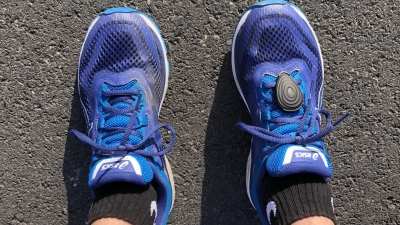
Shoes on, door open, run. Familiar? Most runners skip the warm-up. Not out of laziness, but because the feeling is there that you will "warm up as you go." And yes, technically you do warm up during the first kilometres. But there is a big difference between starting cold and starting properly prepared.
A proper warm-up takes 8 to 10 minutes. What you get in return: a smoother run, less chance of injuries and better performance from the very first minute.
What exactly does a warm-up do?
Your body is not designed to go directly from rest to maximum effort. A warm-up produces a series of physiological changes that literally make running easier:
- Muscle temperature rises: warm muscles are more elastic and generate more force
- Heart rate increases gradually: your heart-lung apparatus prepares for the effort
- Joints produce more joint lubricant: smoother movement, less stiffness
- Activates the nervous system: your walking movement becomes more coordinated
- Mental focus: you prepare for the training to come
Research from ASICS confirms that runners who did a dynamic warm-up before exercise on the treadmill lasted significantly longer than runners who started cold. Not a little longer, but considerably longer.
Dynamic vs static stretching: what's the difference?
This is the most common confusion among runners.
Static stretching: Stretching and holding a muscle (15–30 seconds) is fine as a cool-down, but not as a warm-up. Static stretching before training temporarily reduces explosive power and activates the nervous system less effectively. Exactly what you don't want if you want to perform.
Dynamic Stretching: Repeated, controlled movements through the full range of motion warm up muscles, activate the nervous system and prepare the body for the specific movements of running. This is what you do before a workout.
The rule of thumb: dynamic before training, static after training.
The warm-up step by step
A good warm-up consists of three phases that build on each other. Total duration: 8 à 15 minutes depending on the training that follows.
Phase 1: Slow walk-in (5 minutes)
Start with a 5-minute walk or very gentle jog. So calm that you can finish a full sentence without getting out of breath. This gradually increases your heart rate and brings blood to the muscles.
On cold days, this phase is extra important: cold reduces blood flow to skeletal muscles, making you stiffer and increasing the risk of injury.
Phase 2: Loosening exercises (2–3 minutes)
Loose joints with rotational movements. This takes little time but makes a noticeable difference in smoothness:
- Ankle circling (30 seconds per ankle)
- Turn knees (both sides)
- Hips circling
- Loosen shoulders / windmill blades
Phase 3: Running training (3–5 minutes)
This is the heart of a good warm-up for runners. Running training exercises activate the muscles you use while walking, improve your technique and are also a form of dynamic stretching. Do each exercise over a distance of 15 à 20 meters:
High knees: Raise your knees alternately to hip height, your arms moving as if you were walking in exaggerated slow motion. Activates hip flexors, quadriceps and coordination.
Heels-buttocks (Butt kicks): Kick your heels alternately towards your buttocks. Move your arms along with the walking rhythm. Activates hamstrings and improves backward leg movement.
Skippings (A-skips): High knee lift with a small jump, front of the foot touching the ground. Slightly more explosive than knee lifts. Trains the push-off movement and improves running technique.
Ground step (Dribble step / tripplings): Unwind your feet from heel to toe with minimal forward speed. Activates the foot musculature and Achilles tendon.
Leg swings: Stand on one leg, swing the other leg forward and back (and then sideways). Dynamically stretches the hamstrings and hip flexors. Do this 10–12 times per leg.
Walking lunges: Step forward in a lunge, knee at 90°, push yourself up. Activates quadriceps, glutes and hip stabilizers.
Should the warm-up be different for different workouts?
Yes. You adjust the warm-up to what comes next.
| Training | Warm-up |
|---|---|
| Relaxed endurance run (zone 2) | 5 min walk-in + light loose-fitting exercises, no running training required |
| Tempo run | Full warm-up + 2–3 accelerations to pacer pace at the end |
| Interval training | Complete warm-up including running training + 2–4 progressive gears (strides) |
| Competition | Full warm-up: 10–15 min walk-in + running training + 3–5 strides at race pace |
| Hill sprints | Full warm-up + 5 minutes of easy walking uphill before the sprints |
For a tempo run or interval, you do not enter the quality zone cold. Those first interval blocks are also a warm-up, not quality work. Use accelerations (strides) to prepare your body for the higher intensity to come.
Strides are short accelerations of 60 à 100 meters at or slightly above your target race pace, followed by a leisurely walk back. They activate your fast-type muscle fibers without tiring you.
How long does a good warm-up take?
There is no scientific evidence that a 20-minute warm-up is better than a 10-minute warm-up. What matters is that your muscles are warm (you are sweating lightly), your heart rate is already elevated and your joints feel loose. For most runners,8 à 12 minutesmore than enough.
On cold days: plan a little more time. On hot days: you warm up faster, but the loosening exercises remain valuable.
Warm-up before competitions: do it for real
During races, many runners skip the warm-up out of nervousness, lack of time, ignorance or to save your strength. That's a shame. Especially in a competition, you want to run at your level from the first hundred meters, not use the first 2 km to "loosen up".
Practical for competitions:
- Arrive 30–45 minutes before the start
- 10–15 minutes of leisurely walking in
- Running training
- 3–5 strides at race pace
- Be ready at the starting block 5 minutes before the start — no more warm warming
For shorter distances (5 km, 10 km), an extensive warm-up is extra important: you run at high intensity from the start, there is no time to "loosen up".
Frequently asked questions
Can I also warm up at home before I go out?
Is a warm-up also necessary for a leisurely endurance run?
Static stretching can't hurt, right?
What if I really don't have time?
→ Done with the warm-up? After training, a good cooling-down is at least as important.
→ More about running training as part of your technique lessons?

Bart Vandenbussche is passionate about sport and never shies away from a sporting challenge. He has run several marathons (including sub-3h), is an Iron+Ultra Viking, and currently has the Hyrox bug.
Question or suggestion?
Do you have a question or suggestion? Let us know!