The Hyrox Sled Push is station 2 of 8, and for most athletes it is the first real confrontation with what Hyrox is about: delivering brute force while your lungs are already running at 80%. You have just covered 2 kilometres, processed a SkiErg set, and then there is the Sled: 152 kilograms of steel and carpet resistance. The Hyrox Sled Push is the station that makes or breaks races. Not through technical complexity, but because every mistake you make here haunts you for the rest of your race.
If you are looking for "Hyrox Sled Push tips" or "How do I train for Hyrox Sled Push?", then you are in the right place.
What is the Sled Push at Hyrox?
The Sled Push is the second of 8 Hyrox stations (after the SkiErg and before the Sled Pull). You push a weighted sled over a course of 50 meters, divided into 4 segments of 12.5 meters. The total weight - including the sled itself - varies per category.
It sounds simple, but the way you push here determines how tough the rest of your race will be. The Hyrox race is rarely won during the Sled Push, but it is often lost!
The resistance strongly depends on:
- Type of peat (not smooth rubber or wood!)
- Temperature
- Sled model
- Floor maintenance
"The surface over which you are moving the sled can drastically change what any given weight feels like. This is one of the more important stations to get right - there is large variability in the range of times we see athletes achieve."
Greg Willimas, Rox Lyfe - How to Crush the Sled Push at HYROX
If you train at home or in a gym on a hard surface, the race will feel harder than expected.
How much does the Hyrox Sled Push weigh?
The weight of the Hyrox Sled Push varies per category: Open women 102 kg; Pro women and Open men 152kg; Pro men 202 kg (including sled). The sled itself usually weighs between 30 and 40 kg. Additional weights are placed on the sled to reach the total weight.
| Category | Weight (incl. sled) |
|---|---|
| Women / Women Doubles | 102 kg |
| Women Pro / Women Doubles Pro | 152 kg |
| Men / Men Doubles | 152 kg |
| Mixed Doubles | 152 kg |
| Men Pro / Men Doubles Pro | 202 kg |
What is the average time for the Hyrox Sled Push?
On average, women take 3'05" and men 3'20" to complete the 50 m Sled Push in the Open category. In the Pro division, these times are slightly slower due to the heavier weights.
| Category | Average time (Season 2025-2026) |
|---|---|
| Women's Open | 3:05 |
| Women Pro | 4:18 |
| Men's Open | 3:20 |
| Men Pro | 4:09 |
| Women's Doubles | 1:44 |
| Men's Doubles | 1:56 |
This are the average times of all finishers in the season 2025-2026. View our pages with the average times per station and the average splits per finish time for the most recent times.
Technique: how do you push the sled correctly?
The start
The first step is the toughest, because you have to set a stationary object in motion. That takes more force than keeping the sled moving afterwards. Push off your foot firmly (or use both legs), lean forward and use your full body weight as the initial impulse.
The 3 grip techniques
There are three ways to hold the sled. Experiment to see which one suits your body shape best:
- Arms vertical (against the poles): the most common technique. Provides a direct passage of power from your legs to the sled.
- Arms horizontal (perpendicular to the poles): slightly more control, less direct power. Works well for athletes with a longer torso.
- Arms 90° bent: a hybrid position that gives some athletes more stability during fatigue.
Body angle
- Trunk forward
- Hips low
- Core tightened
Continue to push forward. If you get too upright, you lose power and speed.
Step frequency
Small, quick steps give you more control and require less energy than large strides. Your push is not a sprint, but a sustained, controlled effort. Think of a marching pace, not a sprint.
Smart pacing strategy
Many athletes lose time unnecessarily here. The best approach: work in half lengths (6-7m), take 3-5 deep breaths and continue again.
"A mistake I personally made in my first race was not taking enough short pauses during the push. My time on the station itself was reasonably quick, but I really struggled to run afterwards."
Greg Willimas, Hyrox coach & commenter at Rox Life
The Hyrox Sled Push is not an all-out sprint. It is a controlled effort under fatigue.
Solo vs Doubles Strategy
Solo: go consistently, work in half lengths and don't let others rush you.
Doubles: switch before you become sour, not when you can no longer do it. Agree in advance how exactly you will divide everything.
The best tips for the Sled Push
Grab the sled as low as possible. The higher you grab, the more you unintentionally lift the sled. That increases the friction and makes it heavier.
Work in half lengths. Count to 4 or 5 and continue. This limits the build-up of lactate in your legs.
Take small, powerful steps. Large steps require more strength and provide less control.
Don't go too fast! You will feel the lactate in your legs with a delay.
Common mistakes with the Sled Push
- Gripting too high causing you to lift the sled and push it against the ground, which creates extra friction.
- Taking too big steps
- Non-stop pushing without pause. This way you accumulate too much lactate in your legs.
- The first meters start explosively. Save that energy for later.
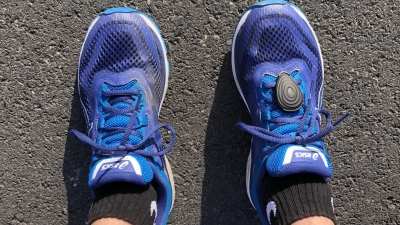
- Wrong shoes: Flat, slippery soles slip on carpet. Make sure you have a grip.
- Underestimating the run after. Your legs will feel heavy after the Sled Push. Consciously walk slower for the first 200m.
How do you train for the Sled Push?
With sled (preferred)
Train with the official competition weight on a comparable surface. Use shorter distances (15-20 meters) with short breaks between sets, to target the specific fatigue and lactate pattern of the race.
- Sled Push intervals: 4x20m @ competition weight, 60s rest
- Heavy Sled Push: 2x50m @ 110-120% competition weight (strength building)
- Compromised Sled Push: 400m run + immediate 2x20m Sled Push (race-specific)
Strength training that improves the Sled Push
You can greatly strengthen your legs and core through classic strength exercises:
- Squat (preference: low bar or safety bar squat) => build up to 1.5x body weight
- Romanian Deadlift => posterior chain, essential for doorstep
- (Heavy) Walking Lunges and Bulgarian Split Squat => unilateral leg strength
- Hip Thrust => glute activation that directly helps with the pushing movement
- Leg Press => volume build-up without too much joint strain
No schedule yet? View our 12-week beginners training schedule.
Should you train heavier than competition weight?
Not necessary. Hyrox requires strength, endurance and recovery capacity. You can train this without using heavy weights.
It can help to avoid any big surprises during your Hyrox race itself. The turf may be different than in your fitness and may feel heavier. By sometimes training with heavier weights, you are prepared for this.
Be careful! Structurally much heavier training increases the risk of overloading knees, hips and lower back.
Alternatives if you don't have a Sled
No Sled access? No worries! These exercises build the same muscle groups and simulate the load:
- Treadmill Push: turn off the treadmill and push it forward yourself. The resistance feels surprisingly similar.
- Prowler push / regular fitness cart: if the gym has a prowler, use it.
- Walking up a gentle slope with a heavy backpack: works the hip exsensors and core
- Heavy Resistance Band March: put a resistance band around your waist and ask someone to provide resistance while you walk away (creative but effective)
- Heavy Romanian Deadlifs superset with sprints: simulates the lactate-to-cardio transition
Recommendation: visit a Hyrox gym or affiliate gym at least once before your race to experience the real sled on carpet. Nothing completely replaces that.
Which shoes should I use for the Hyrox Sled Push?
Choose flat hybrid shoes with a rubber sole and good profile, such as the Puma Velocity Nitro, Puma Deviate Nitro, Saucony Endorphins, Brooks Ghost or Nike Pegasus. Avoid carbon plate running shoes. They slide away on carpet.
Summary: This is how you get better at the Hyrox Sled Push
- Low stable position
- Small, quick steps
- Half lengths
- Keep focusing on your breathing
- Train strength and transition to walking
- Focus on efficiency, not ego
Do you want to optimize your entire preparation? View our complete guide.

Bart Vandenbussche is passionate about sport and never shies away from a sporting challenge. He has run several marathons (including sub-3h), is an Iron+Ultra Viking, and currently has the Hyrox bug.
Question or suggestion?
Do you have a question or suggestion? Let us know!
Tags