What are fats?
Fats are the slow energy suppliers. The breakdown of fats costs us much more oxygen than the breakdown of carbohydrates, and is therefore not as efficient. In addition, fatty food takes extra time to digest, meaning energy is only available late. On the other hand, our fat reserve is inexhaustible. Even someone with an extremely low fat percentage of only 8% still has more than 40,000(!) kcal that he can get from his fat reserve.
Fats are mainly used during long efforts that are not too heavy.
You can divide them into:
- Unsaturated fats
- Saturated fats
Fats, together with carbohydrates and proteins are part of the macronutrients.
Function of fats
- Building material
- Fuel: 1 gram of fat provides 9 kcal of energy
- Insulation (to keep your body warm)
- Constituent of vitamins and hormones: fat helps you absorb vitamins A, D, E and K (the fat-soluble vitamins)
- Taste enhancer
High-fat food
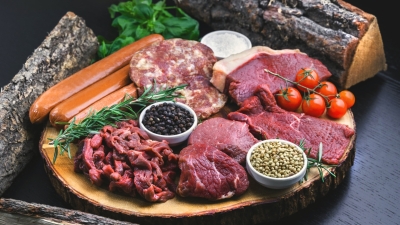
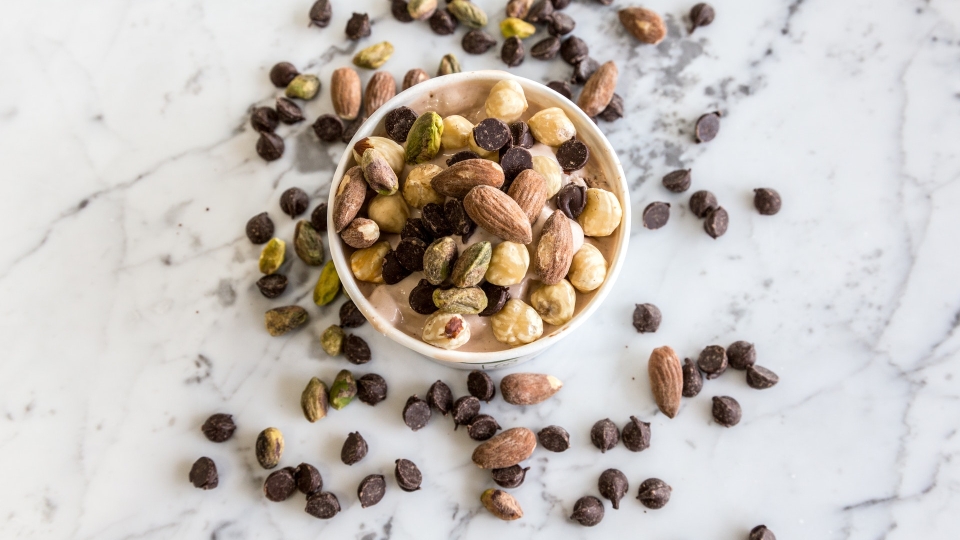
Examples of high-fat foods: butter, shortening, oil, cheese, milk, peanut butter, chips, nuts, eggs...
Tips to make food less fat-rich
- Be aware of consumption of hidden or invisible fats
- Choose low-fat preparation methods
- Choose (skimmed and) semi-skimmed milk products
- Choose low-fat and semi-fat cheese
- Choose lean meats
- Do not eat more than 100 grams of meat per day
- Top your sandwich with fruit, vegetables or fruit puree
- Moderate the use of spreading and cooking fat
- Blaze 1 of the 2 slices
- Allow 1 tablespoon of cooking fat per person
- Moderate the consumption of cookies, pastries, chocolate, ice cream, etc. (do not eliminate it, but look for balance => not every day and in moderation)
- Replace cream with the diluted version (5% fat)
Healthy fats
To help you choose healthy fats, we have created the following table. Try to eat as many products from the green column as possible. The products in the yellow column are also perfect. However, these in the red column are not recommended (although exceptionally possible).
| Green (preferred) | Yellow | Red (not recommended) |
|---|---|---|
| Vegetable Navy Vegetable margarine (< 60% fat) Vegetable oil |
Margarine (60-75% fat) Coconut oil |
Hard margarine (> 75% fat) Butter |
| Cream (< 10% fat) | Cream (10-25% fat) | Cream (> 25% fat) |
| Oily fish, such as salmon, eel and mackerel | ||
| Notes Avocado Egg yolk Peanut butter |
How many grams of fat do I need?
You can calculate the need for proteins in different ways. On the one hand, you can calculate this based on your total energy needs. On the other hand, you can calculate them based on your body weight. We usually choose this second way.
Fat requirement based on total energy requirement
The Health Council recommends that you get between 20 and 35% of your total energy needs from fats. 15% is considered an absolute minimum.
Furthermore, only a maximum of 10% of the total energy may come from saturated fats, and a maximum of 1% from trans fats, although the aim should be 0%.
It is also important to consume a maximum of 300 mg of cholesterol per day.
Others believe that you should adjust your fat requirement depending on body type:
- Ectomorphic: 15-25%
- Mesomorphic: 25-35%
- Endomorphic: 35-45%
Others will divide your protein needs according to your goal:
- Weight loss: 30%
- Maintaining weight: 25%
- Arrival: 20%
Fat requirement based on your body weight
Another way is to calculate your fat needs based on your body weight. It is this way that we will always follow.
You should eat between 0.5g and 1.5g per kg of body weight every day.
If your goal is to lose weight, then you will be between 0.5 and 1g per kg body weight. If you want to gain muscle mass, you should go closer to 1.5g.

Bart Vandenbussche is passionate about sport and never shies away from a sporting challenge. He has run several marathons (including sub-3h), is an Iron+Ultra Viking, and currently has the Hyrox bug.
Question or suggestion?
Do you have a question or suggestion? Let us know!