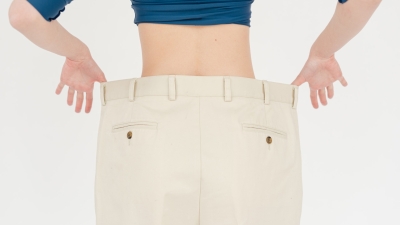
The scale says one thing. A tape measure says something else. And sometimes the tape measure is the more honest of the two.
Body measurements record what the scale cannot: where you lose fat, where muscles grow, how your body shape changes. A centimetre less on your waist or a centimetre more on your biceps is tangible proof of progress that no scale can give you.
What sizes do you take?
For a complete picture of your body, measure the following circumferences:
Head and neck:
- Neck (middle of the neck)
Upper body:
- Chest (at nipple height, for men; at the widest point for women)
- Shoulders (at the widest point, above the deltoids)
- Biceps left and right (at the thickest point of the upper arm, relaxed and tense)
- Forearm left and right (at the thickest point of the forearm)
Hull:
- Waist (the narrowest point of the torso, usually just above the navel)
- Belly/navel (at navel height, if you want to distinguish it from the waist)
- Hips (at the widest point of the hips and buttocks)
Lower body:
- Thigh left and right (at the thickest point of the thigh)
- Calf left and right (at the thickest point of the calf)
That is a total of fourteen measuring points. Would you rather be more concise? Then waist, hips, chest and one arm and leg measurement are very informative.
How do you measure accurately?
A tape measure for body measurements costs a few euros and is more accurate than a regular tailor's measure. Always use the same measuring tape, because different brands have small deviations.
The basic rules
Leave the ribbon horizontally. Measuring diagonally or rotated will give a larger number than the actual circumference.
Do not stretch the ribbon tightly, but connect it. The ribbon should not press the skin but should not hang loosely over it either. A consistent "fit but not tight" is the goal.
Always measure at the same point. Use anatomical reference points (navel height, nipple height, the narrowest point) and note them down. If in doubt: use a permanent mark or write down how many centimeters above or below a reference point you measure.
Measure relaxed. Abdomen not sucked in, muscles not tense, unless you consciously want to keep track of the tensed measurement (this may be useful for biceps).
Measure fasting in the morning. Just like weighing, this gives the least daily variation. Your waist circumference is always larger after eating.
Use a second person for the back
Measurements of the back and shoulders are difficult to do yourself. If you have the option, have someone else measure the shoulder width and back width. This makes these measurements more reliable and easier to reproducible.
How often do you measure?
Body circumferences change more slowly than weight. One measurement every three à four weeks makes sense. Measuring weekly does not produce enough visible change and can be discouraging.
Always make a baseline measurement: write down your starting measurements before you start a new trajectory. That first measurement will be your most valuable reference point later.
How do you record your measurements?
A simple table in a notebook or spreadsheet will suffice. Record the date and all readings. An example:
| Measurement | 1 Jan | Feb 1 | Mar 1 |
|---|---|---|---|
| Neck | 38 cm | 38 cm | 37.5 cm |
| Chest | 96 cm | 95 cm | 94 cm |
| Waistline | 84 cm | 82 cm | 80 cm |
| Hips | 98 cm | 97 cm | 96 cm |
| Biceps L (relax) | 34 cm | 34.5 cm | 35 cm |
| Thigh L | 58 cm | 57 cm | 56 cm |
In this example, the weight may hardly decrease, but the measurements clearly show fat reduction on the torso and muscle growth on the arm.
Body proportion: waist to hip ratio
A derived number that is increasingly used in addition to BMI: the waist-to-hip ratio (WHR). You divide your waist circumference by your hip circumference.
Healthy values:
- Men: under 0.90
- Women: under 0.85
A higher ratio indicates more abdominal fat, which is associated with a higher cardiovascular risk. The waist-hip ratio is more informative than BMI because it takes into account the fat distribution, not just the total weight.
Frequently asked questions
My waist and hips have dropped but my weight is the same. What does that mean?
My left and right sides are not symmetrical. Is that normal?
My waist circumference fluctuates greatly from day to day. What's wrong?
In summary
Body measurements add a dimension to your progress that weight and photos don't fully cover. Measure key circumferences (waist, hips, chest, arms, legs) every three à four weeks, always at the same point and in the same way. Consistency determines the reliability of your data.
→ Combine your measurements with progress photos and your weight for a complete picture.
→ Back to the Current ME overview.

Bart Vandenbussche is passionate about sport and never shies away from a sporting challenge. He has run several marathons (including sub-3h), is an Iron+Ultra Viking, and currently has the Hyrox bug.
Question or suggestion?
Do you have a question or suggestion? Let us know!
Tags