The finish is a starting point. What you do in the hours, days and weeks after a race determines how quickly you are ready for the next challenge and whether you stay injury-free in the coming weeks.
Many runners underestimate how heavily a race loads the body. A 5km might feel less dramatic than a marathon, but even a short race at maximum intensity leaves marks that you cannot see.
What happens to your body after a competition
During a running race, several physiological processes occur that require recovery:
Muscle damage: micro-damage occurs in muscle tissue with every step. During a competition, where you run faster than in training and further exhaust your muscles, the damage is greater than normal. Downhill sections and the final sprint particularly increase the eccentric damage.
Glycogen depletion: depending on the distance and intensity, your carbohydrate reserves are partially or completely depleted.
Fluid balance: you have lost fluid and electrolytes through sweating. In longer matches that loss is significant.
Immune suppression: After intensive endurance exercise, the immune function temporarily decreases, the so-called "open window" effect. You are in the 24 à More susceptible to infections 72 hours after a tough match.
Inflammatory responses: the muscle damage triggers an inflammatory response. This is normal and part of the recovery process, but it explains the stiffness and soreness that persists in the days after a match.
Recovery guidelines by distance
How long recovery takes depends greatly on the distance and intensity:
| Distance | Light activity possible | Quiet training possible | Intensive training |
|---|---|---|---|
| 5 km | Day 1 à 2 | Day 3 à 5 | Week 2 |
| 10 km | Day 2 à 3 | Day 4 à 6 | Week 2 à 3 |
| Half marathon | Day 3 à 5 | Week 2 | Week 3 à 4 |
| Marathon | Day 3 à 7 | Week 2 à 3 | Week 4 à 6 |
These are averages. Older runners, runners who have trained heavily in the run-up, and runners who have really "drained" the race. need more time. Listen to your body: muscle pain, fatigue and an increased resting heart rate are reliable indicators.
The first 24 hours: recovery begins immediately
Nutrition and hydration
Start replenishing glycogen and proteins as soon as possible after the finish. The recovery nutrition applies here to a greater extent.
- Drink water and electrolytes
- Eat a carbohydrate-rich snack with protein within 30 à 60 minutes after the finish
- Follow that up with a full meal within two hours
Chocolate milk, a banana with yoghurt, a sandwich with a protein-rich filling: all fine. Avoid excessive alcohol, especially in the first hours.
→ Read the full recovery nutrition guide for details.
Movement
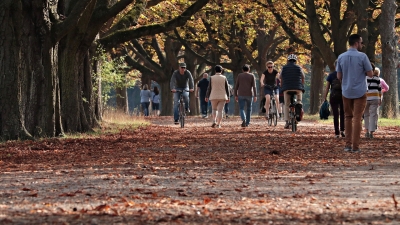
Do not stop completely after a match. Walk the first ten à fifteen minutes after the finish. In the hours that follow, light exercise is better than sitting completely still.
The first day after a competition: walking or cycling very quietly is okay; and promotes blood circulation. Walking is not yet an option.
Ice or cold therapy
Ice baths after marathons are popular among elite athletes for reducing inflammation and muscle soreness. For recreational runners, the evidence is mixed: Ice after exercise dampens the inflammatory response, but that response is also part of the recovery process. A cold shower after the match is pleasant but not a requirement.
Days 2 to 5: the stiffest period
The worst muscle pain typically appears 24 à 48 hours after the match, not immediately after. This phenomenon is called DOMS (Delayed Onset Muscle Soreness) and is the result of the inflammatory response to muscle damage.
What helps during this period:
Light exercise: a short walk, gentle cycling or a few lengths of swimming promote blood circulation and accelerate the removal of waste products. Do not walk, do not exercise intensively.
Protein-rich food: proteins are the building blocks for muscle recovery. In the days after the competition, ensure sufficient protein intake spread throughout the day.
Sleep: the most valuable recovery strategy. Sleep more than usual if possible. Growth hormone, which repairs muscle tissue, is secreted mainly during deep sleep.
Do not use NSAIDs (ibuprofen) structurally: painkillers suppress the inflammation that is part of the recovery process. Occasionally for the worst pain is acceptable, but structural use during the recovery period can delay recovery.
Week 2 to 3: return to walking
When the muscle pain is gone and you feel your energy back, it is time to resume carefully. The rule of thumb: start with 30 à 40% of your normal training volume, completely at an easy zone 2 pace.
No intervals, no tempo runs, no hill training in the first two weeks after a half marathon or marathon. Your body has recovered externally but is still repairing internally.
Signs that you are resuming too early:
- Your resting heart rate is still elevated
- Muscle pain returns after a run
- You feel noticeably more tired than normal during gentle activity
- Your motivation is low and training feels like a duty
The emotional side of recovery
A phenomenon that affects many runners after major races, especially the marathon: post-race blues. You've been working towards this goal for months, and now it's over. The emptiness that follows, even if the race went perfectly, is a recognized psychological phenomenon.
That feeling is normal. It helps to set the next goal early on: not immediately planning a new competition, but an intention for the coming months. That gives direction without the pressure of starting again immediately.
However, wait until you have fully recovered before making any final decisions about your next training cycle. Decisions you make a week after a marathon are rarely the best ones.
Frequently asked questions
Can I run the day after a competition?
Should I schedule massages after a game?
I ran a disappointing race. When can I do it again?
How do I know when I'm ready for the next training cycle?
In summary
Recovery is active, not passive. Eat and drink immediately after the finish, exercise lightly in the first days, sleep well and give your body the time it deserves. The more disciplined you recover, the faster you will be ready for the next step.
→ Back to the competitions overview.
→ Ready for the next challenge? Read which training principles determine your approach.
Bart Vandenbussche is passionate about sport and never shies away from a sporting challenge. He has run several marathons (including sub-3h), is an Iron+Ultra Viking, and currently has the Hyrox bug.
Question or suggestion?
Do you have a question or suggestion? Let us know!