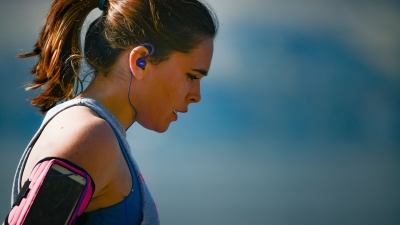
Your training is done. The last metre has been run, the app stops the timer. Now what? Most runners open the door, take off their shoes and drop onto the sofa. Understandable. But whoever invests five to ten minutes in a proper cool-down recovers faster and starts the next training fresher.
Why a cool-down?
During running, a relatively large amount of blood goes to the working muscles. Your heart pumps harder, your breathing speeds up. If you stop abruptly, that blood may temporarily "behind" in the muscles. Which in rare cases causes dizziness, and always a slower recovery process.
A cool-down allows your body to gradually return to its resting position:
- Heart rate and blood pressure decrease in a controlled manner
- Restores blood circulation and removes waste products (such as lactic acid)
- Muscles go from active to relaxed
- Nervous system calms down
A small nuance from scientific research: a meta-analysis by Van Hooren showed that a cool-down has no significant effect on muscle pain or long-term recovery from muscle damage. Sounds surprising, but the practical conclusion is simple: a cool-down never hurts, often helps (certainly mentally and for direct blood pressure regulation) and takes minimal time. Do it.
The cool-down step by step
Step 1: Finishing (5–10 minutes)
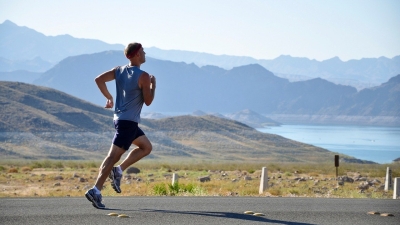
Do not stop abruptly. Build the last 5 à Reduce your run for 10 minutes to an easy jogging pace, and finish with 2 à 3 minutes walking. This way your heart rate gradually decreases and your blood circulation has time to normalize.
A useful rule of thumb: go back to a pace at which you can easily pronounce a complete sentence. If you are out of breath, you are still walking too fast.
Put on something warm when it is cold: your body cools down quickly after exercise and cooling down while you stretch actually increases stiffness.
Step 2: Static stretching (5–10 minutes)
After a warm-up, do dynamic stretching (moving). After a workout you do static stretching: stretch a muscle and stretch 20 à Hold for 30 seconds.
The logic: after exercise your muscles are warm and plastic. This is the best time to work on flexibility. Never stretch so far that you feel pain. You may feel a stretch, but the discomfort should last 5 à Pull away for 10 seconds, after which you can go a little deeper.
Focus on the muscle groups you used the most:
Quadriceps stretch: Stand on one leg, grab your ankle and pull your heel toward your buttock. Knees together, upper body upright. 20–30 seconds per leg.
Hamstring stretch: Sit on the floor with your legs extended. Gently lean forward until you feel the stretch in the backs of your thighs. Or: stand on one leg, lay the other outstretched on a bench and lean slightly forward.
Hip flexor / groin stretch (lunge stretch): Lower into a lunge step, back knee on the floor. Push your hips forward slightly. Hip flexors often become short and stiff in runners, especially in people with sedentary jobs.
Calf stretch: Stand with your hands against a wall. Step one leg back, heel flat on the floor. Hold for 20–30 seconds. Also do the variation with a slightly bent knee (for the soleus and Achilles tendon).
Piriformis / buttock stretch: Sit on the floor, cross one leg over the other (foot on knee). Gently lean forward. Relaxes the deep glutes and hip extensors.
IT band / hip abductor stretch: Stand up straight, cross one leg behind the other and lean sideways away from the crossed leg. But be careful: the IT band is not a muscle but fascia.
Optional: Foam rolling (5 minutes)
A foam roller after training is an effective way to release stuck tension, stimulate blood flow and reduce micro-knots in the muscles. Focus on calves, quadriceps, IT band and glutes.
Use the foam roller slowly and controlled: 30 à 60 seconds per muscle group. Pause on sensitive areas instead of quickly rolling over them.
Optional: Shower
A lukewarm or cold shower after training can support the recovery process. Cold water reduces swelling and accelerates the removal of metabolic waste. Ice baths are used by top athletes, but for most recreational runners a cold shower is sufficient and a lot more comfortable.
Always wait until your heart rate has dropped and you have finished walking before getting into the shower.
How long does a good cool-down take?
For a quiet endurance run: 5 à 8 minutes of walking + 5 minutes of stretching is more than sufficient.
For an intensive training (interval, tempo run) or a long endurance run (>16 km): plan 10–15 minutes. Your muscles have more to process, and the stretches help recovery.
After a marathon or half marathon: take your time. 10 minutes of walking, extensive stretching, foam rolling and a warm shower. Your body has the right to it.
Cooling down varies per training
| Training | Cooling down |
|---|---|
| Relaxed endurance run (zone 2) | 5 min walking + 5 min stretching |
| Tempo run | 8–10 min walking + 8 min stretching |
| Interval training | 10 min walking + 8–10 min stretching |
| Long endurance run (>16 km) | 10 min walking + 10–15 min stretching + foam rolling |
| Competition | 10 minute walk + extensive stretching + warm bath/shower |
Cooling down and muscle pain: what's wrong with it?
The popular belief is that a good cool-down prevents muscle soreness. The science here is more nuanced: There is no strong evidence that a cool-down significantly reduces delayed onset muscle soreness (DOMS). This muscle pain is caused by small tears in the muscle fibers after unusual or intensive strain: something that a cool-down cannot completely prevent.
What a cool-down does: allow the body to land gradually after exercise, reduce the risk of dizziness and normalize blood circulation. And mentally? It is a ritual that consciously concludes the training. That has value.
Frequently asked questions
Is a cool-down as important as a warm-up?
Can I shower immediately after walking out?
Do I have to stretch every time?
Foam rolling: before or after stretching?
→ Do you want to further optimize your recovery? Read the page about injury prevention or return to the training hub for an overview of everything that will complete your training.
Bart Vandenbussche is passionate about sport and never shies away from a sporting challenge. He has run several marathons (including sub-3h), is an Iron+Ultra Viking, and currently has the Hyrox bug.
Question or suggestion?
Do you have a question or suggestion? Let us know!