Running and weight loss are almost automatically mentioned in the same breath. Shoes on, burn calories, lose kilos. That is how simple it sounds, and yet many people are disappointed when the weight barely shifts after weeks of faithful running.
There is a reason for that. And if you understand it, you will train smarter and see results faster.
The trap that almost everyone falls into
You walk for an hour, burn 600 kcal, and feel that you have "earned something". An extra portion of dinner, a cookie with coffee, a glass of wine, because you have exercised. Before you know it, you'll just eat up the effort again.
This is not a lack of willpower. It's biology: Running stimulates hunger, and your brain overestimates how many calories you've burned. Most people burn less during a running session than they think.
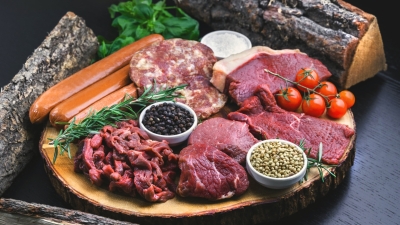
Solution: don't see running as a reason to eat more, but as an extra driver in your energy balance. Replenish your energy with a protein-rich snack after your run. That saturates better than carbohydrates and helps muscle recovery.
Walking slowly burns more fat
This sounds counter-intuitive, but it's true: if you run too fast, you mainly burn sugars instead of fat. If you want to lose weight, it is advisable to walk slowly.
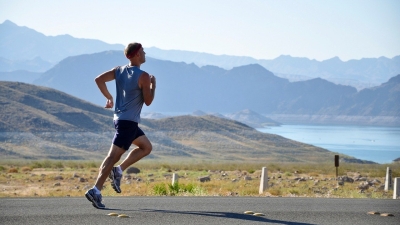
In zone 2 (a pace at which you can still comfortably hold a conversation) your body burns a larger proportion of fat as fuel. Moreover, you can maintain zone 2 running for longer, so you burn more calories per session, and you recover faster for the next training.
→ Read more about zone 2 training: why running slower makes you lose weight faster.
How quickly do you lose weight by running?
That is theoretically almost 1 kg per month from running alone. In practice, less, because your body adapts and you often eat a little more. But if you combine that with mild calorie awareness, then 0.5 to 1 kg per month is a realistic and sustainable pace.
Losing weight quickly doesn't work. Too large a calorie deficit combined with running increases the risk of injury, costs muscle mass and makes your training harder than necessary. With a mild deficiency you keep energy and recovery in balance.
Strength training: the silent accelerator
Many people who want to lose weight focus purely on walking. But anyone who also does strength training will lose weight faster and more sustainably.
Why? Muscle mass increases your resting burn: your body burns more calories, even on the couch. In addition, strength training prevents the loss of muscle mass that can occur with endurance training. The result: you not only become lighter, but also tighter and stronger.
30 to 40 minutes of strength training twice a week in addition to your running training is enough to achieve this effect.
→ Read the page about strength training for runners for the most effective exercises.
Practical: this is how you approach it
Start quietly
If you are just starting out or returning after a long break, build up slowly. Your condition will improve quickly, but tendons and joints need more time. Starting up too quickly is the quickest way to an injury, and then you stand still.
Loop 3 à 4 times a week
That's the volume at which you'll see noticeable calorie-burning results without overloading your body.
Combine long and easy with short and intensive
Two easy endurance runs in zone 2 plus one interval training per week is a proven effective mix for both fat burning and fitness building.
Pay attention to your diet, but make it an obsession
You don't have to track macros or diet. Eat more proteins (they saturate better and protect muscle mass), less processed food and drink enough water. That's 80% of the work.
Give it time
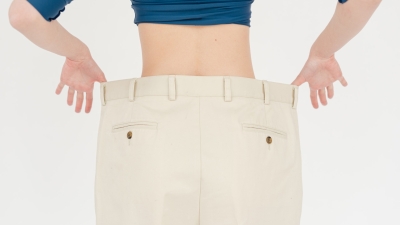
In the first few weeks you may see little movement on the scale: that is normal. Your body adapts, builds muscle mass and regulates moisture. Also measure your clothing and fitness, not just the scale.
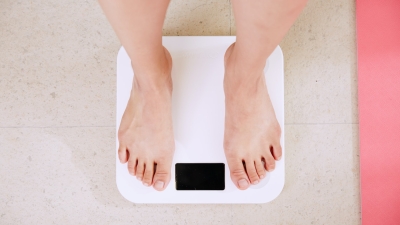
A word about the scale
Many people get discouraged because they train for weeks without the scale moving. What really happens: you lose fat, but your body builds muscle mass at the same time, and muscle is heavier than fat. You will notice that fat disappears from your body and you gain muscle in return.
Looser clothing, more energy, better fitness and a firmer body are better indicators of progress than a number on the scale.
Frequently asked questions
Should I walk on an empty stomach to burn more fat?
I've been running for months but haven't lost weight. What's going wrong?
In summary
Running works great as part of a weight loss strategy, but never as the only strategy. The combination of gentle walking (zone 2), strength training and light conscious nutrition is the most sustainable path to weight loss. Don't expect miracles in week 1, but those who are consistent will see after 6 à 8 weeks of real results.
→ Haven't started running yet? Start with the start-to-run schedule.
→ Already running and ready for more structure? Check out ourtraining hub.
Bart Vandenbussche is passionate about sport and never shies away from a sporting challenge. He has run several marathons (including sub-3h), is an Iron+Ultra Viking, and currently has the Hyrox bug.
Question or suggestion?
Do you have a question or suggestion? Let us know!